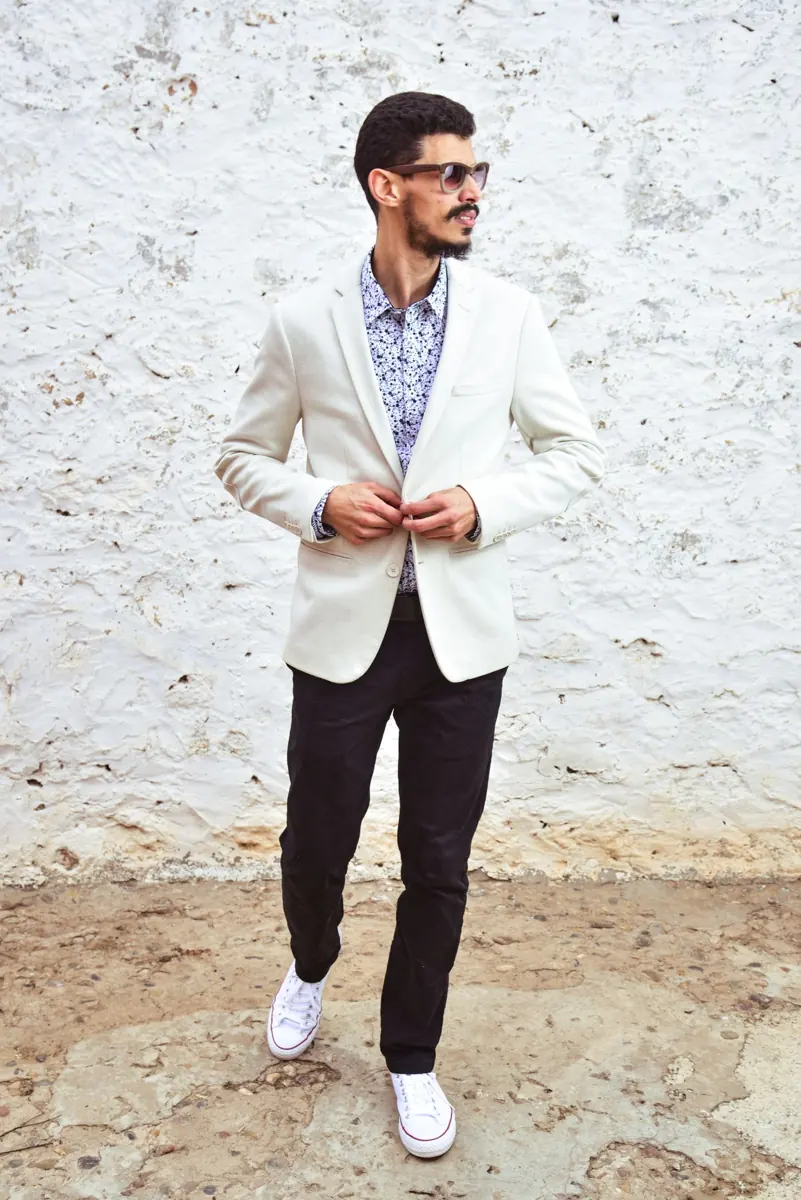
The smart casual formula that shows up across so many modern celebrity looks is simple to name and surprisingly easy to misapply: one element that carries structure, one that carries ease, and one that adds a deliberate change of texture or finish. Trousers that are slightly too precise, a plain knit, clean sneakers, and an unstructured jacket can look effortless on a red carpet or a city sidewalk alike. Most people who try to copy the look focus on the surface, grabbing a blazer and a T-shirt and hoping the mix reads as intentional. It usually reads as either overdressed or accidental. This guide breaks the formula into its working parts, shows how to build it from clothes most people already own, and explains where it breaks down.
Smart casual is not a dress code with fixed items. It is a balance between two registers. One register says the wearer has thought about their clothes. The other says they are comfortable enough to move through a day without performing. When the balance tips too far toward the first, the outfit looks costumed. When it tips too far toward the second, it looks careless. The modern version of the look tends to sit in the middle by using a small number of well-chosen contrasts rather than many layers of styling.
The three-part structure
The most reliable way to read the formula is to split any outfit into three roles.
- The anchor is the piece that gives the outfit its outline. It is usually a trouser, a skirt, or a jacket with a clean line, sometimes with a slight sharpness at the shoulder or hem.
- The relaxer is the piece that removes stiffness. A plain knit, a soft cotton shirt worn open at the collar, or a worn-in denim jacket all do this job.
- The contrast is the detail that signals intent. It might be a leather shoe with a rubber sole, a matte fabric beside a glossy one, or a single metal accessory against soft cloth.
The formula works when each role is present and none is doubled. Two anchors compete. Two relaxers make the outfit feel unfinished. Two contrasts create visual noise. Most failed smart casual looks are not missing a piece; they are carrying one role twice.
Worked example
Consider a hypothetical example: a person heading to a midday meeting followed by a gallery visit. They choose wide grey wool trousers with a clean crease (anchor), a navy fine-gauge crew-neck knit tucked in only at the front (relaxer), and white leather sneakers with a visible but thin sole (contrast). A plain watch completes the look. The trousers provide the outline that keeps the knit from looking like loungewear. The knit keeps the trousers from looking like office wear. The sneakers tell the observer that the outfit was built for walking and not just for sitting. Swap the sneakers for pointed loafers and the look leans formal. Swap the knit for a hoodie and it leans casual. The formula is the same; the weighting changes.
Why the formula travels
The look persists because it solves a practical problem: people need clothes that move between settings without a full change. Clothing has long been used to signal status and occasion through ornament and structure, and the smart casual register can be read as a more recent impulse to reduce visible effort while keeping a sense of order. Fashion collections such as the V&A’s, which span a wide range of historical dress, are useful background for seeing how designers have worked between ease and structure, though they do not directly establish the formula described here.
That history is useful for a reader because it shows that the balance is not new. Designers who built wardrobes around tailored pieces often softened them through fabric choice, fit, or styling. The modern celebrity version is a continuation of that tradition, not an invention of social media. Reading the formula as a long-standing approach to dress helps avoid the trap of chasing one season’s version.
Fabric and finish: where the balance is decided
Two outfits with identical silhouettes can read in opposite registers depending on fabric. Matte wool, cotton jersey, and brushed denim tend to sit toward ease. Crisp suiting, glossy leather, and fine poplin lean toward structure. Smart casual works best when at least one piece in the outfit carries the opposite finish from the rest. A soft knit under a structured leather jacket, or a crisp shirt under a worn-in denim trouser, creates the tension that makes the look feel considered.
Care and condition matter here too. General textile care resources such as clevercare.info note that different materials need different care routines. Always follow the care label on each garment. For smart casual, this has a practical consequence: a knit that has pilled or a denim that has faded unevenly can shift the look from deliberate to tired more quickly than many other factors. The formula depends on pieces that still look new enough to read as chosen.
| Role | Works well | Breaks the balance when |
|---|---|---|
| Anchor (trouser) | Clean crease, mid-weight wool or cotton twill, slight taper or wide cut | Creased, shiny at seat, or too short for the shoe |
| Relaxer (top) | Fine-gauge knit, soft cotton, worn-in denim jacket | Pilled, stretched at the neck, or logo-heavy |
| Contrast (shoe or accessory) | Clean leather or canvas sneaker, one metal accent | Several competing details, or a shoe that does not suit the trouser hem |
Step-by-step: building the look from your own wardrobe
- Start with the trouser. Choose the one piece you would wear in a meeting and still feel comfortable walking in. Check the hem against your shoes before anything else.
- Pick a relaxer that is clearly softer than the trouser. If the trouser is crisp, the top should be knit or cotton with visible give. If the trouser is already soft, a slightly more structured top keeps the balance.
- Add one contrast. Choose either a shoe or an accessory, not both, unless the rest of the outfit is very quiet.
- Test the outfit by removing one piece. If removing the jacket or the watch makes the outfit look better, the outfit had too much. If removing the knit makes the trouser look awkward, the relaxer is doing necessary work.
- Check the three roles again. Confirm that you have one anchor, one relaxer, and one contrast. Adjust until each is clearly present.
Common mistakes
- Buying a jacket to solve everything. A blazer added to a casual outfit often makes it look like a costume unless the trouser and shoe already match its register.
- Using athletic footwear in every case. Running shoes shift the look toward sport and can overwhelm a fine trouser. Clean leather or canvas usually works better.
- Mixing too many textures. Knit, denim, leather, and satin in one outfit rarely reads as smart casual. Two textures is usually the limit.
- Ignoring length. A trouser that stops above the ankle with a thick sole, or pools heavily over a slim shoe, breaks the outline the formula depends on.
- Letting logos lead. One visible brand is fine. Several can make the outfit look like a merchandise display.
Limitations and trade-offs
The formula is flexible, but it has real limits. It does not replace formal business attire for environments that require it, and it is not designed for physical activity where mobility, breathability, or protection matter more than appearance. In hot weather, the knit relaxer may be the wrong choice, and a lightweight cotton shirt or a thin linen layer may do the same job more comfortably. In cold weather, the balance shifts toward outerwear, which can dominate the outfit and require recalibration of the trouser and shoe.
There is also a trade-off between versatility and character. A neutral smart casual outfit works in many settings but can feel anonymous. Adding a distinctive contrast, such as an unexpected colour in the knit or a more textured shoe, increases personality but narrows the number of settings where the look feels right. Most readers will find that one or two signature combinations serve them better than an attempt to make every outfit distinctive.
How this differs from the rest of your wardrobe planning
Smart casual is a register, not a wardrobe. It sits alongside questions about colour palettes, public-facing style, and travel layering, but it answers a narrower question: how to balance structure and ease within a single outfit. If your larger goal is a coherent set of clothes that works across seasons, the formula is a tool inside that system rather than a complete plan. Use it to test whether a piece you already own can carry the anchor, relaxer, or contrast role before you buy anything new.
Questions to ask before you buy
- Do I already own a trouser that can serve as the anchor for at least three different tops?
- Will the relaxer still look intentional after a season of washing, or will it pill and stretch?
- Does my shoe suit the trouser hem and the register of my most common settings?
Final checks
The smart casual formula is most useful when treated as a checklist rather than a style identity. Before leaving the house, confirm the anchor, relaxer, and contrast, remove one piece to test the balance, and make sure no role is doubled. Keep care and condition in view, because worn pieces undermine the look faster than any styling choice. When the three roles are clear and the fabrics still look fresh, the outfit reads as deliberate in almost any setting that calls for it.
Related resources
Cover: Pexels photograph, used as an editorial illustration. Stock models and products shown do not imply endorsement or independent product testing. Image license.