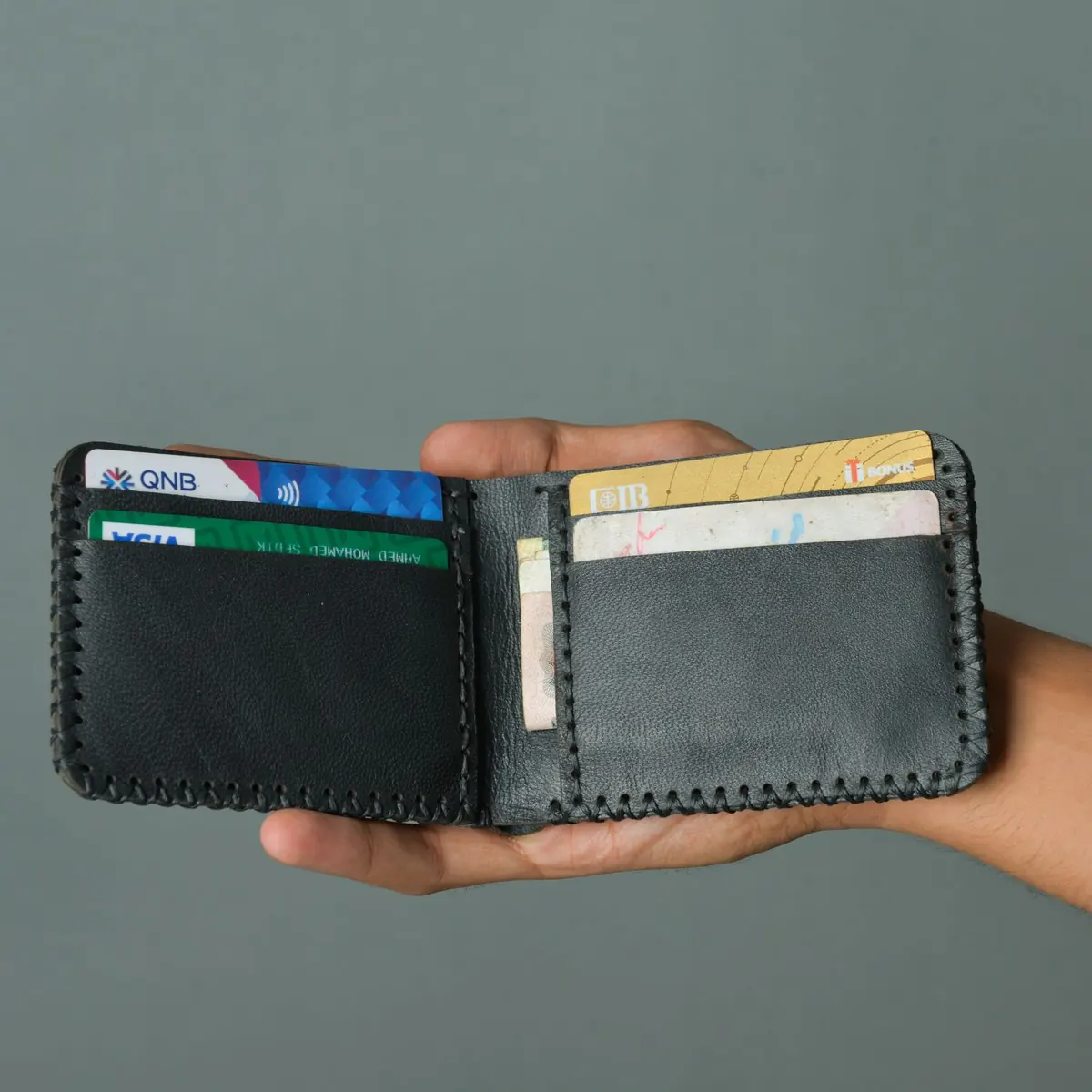
The best minimal wallet for events, travel, and daily carry is the one that holds the few things you truly need, keeps them secure, and lets you reach your payment card and ID without unpacking half your bag. Slimness is the appeal, but access is the test. A wallet that looks clean in a photo and then forces you to dig through a jacket pocket at a ticket gate has failed its job.
This guide is a practical walkthrough for choosing a minimal wallet across three different days: a conference or launch event where you stand and talk for hours, a travel day with security checkpoints and boarding passes, and an ordinary day of coffee, errands, and commuting. The same wallet is rarely ideal for all three. The goal is to identify which of your days is most demanding and to make that one work without sacrificing the others.
Start with what you actually carry
Most buying mistakes happen before you open a single product page. People choose a wallet size based on an idealized carry list, then discover they still need a receipt, a transit card, or a second card for a different account. Write down what you pull out of your wallet in a normal week. Count the items and note how often each one is used.
A simple audit might look like this:
- Payment cards you use daily (usually one or two)
- Government photo ID, which you may need at airports, venues, or for age checks
- Transit or access cards
- Cash, typically a small amount folded once
- Receipts or temporary paper you intend to keep
- Travel documents such as a boarding pass, if you print them
Be honest about frequency. An item you need once a month should not dictate a daily design, but it should have a plan. For example, you might keep a hotel key card in a separate pocket rather than expanding the main wallet.
An illustrative example
Hypothetical example: A person attends a two-day industry event, flies out the next morning, and returns to ordinary commuting the following week. Their daily list is one card, a transit card, and a little cash. For the event, they add a badge and a lanyard-friendly ID. For travel, they add a passport or ID that must be easy to present at the security checkpoint. A wallet that holds two cards and one ID slot works well for commuting but becomes awkward on travel day when the passport does not fit and must live in a bag pocket. The fix is not a bigger wallet; it is a decision about where the passport lives and how it is reached.
Evaluate access before size
Access is the difference between a wallet you love and one you abandon. Four questions reveal whether a design will work:
- Can you remove a card with one hand? If you must pinch, slide, and tilt, you will struggle at a ticket gate with a coffee in the other hand.
- Does the closure stay closed in motion? Open-top designs are quick but can let cards slip when you bend, run for a train, or lean forward on a plane seat.
- Can cards be pulled without pulling the others? Tight stacks can cause the card you want to catch, and bending a stiff card repeatedly is a fast way to wear the slot.
- Where does the wallet sit when you sit down? A thin wallet in a back pocket may be comfortable while standing but uncomfortable on a bench or in a car seat.
Test these questions with your actual cards, not with a mental image. Slide them in, shake the wallet gently, and try retrieving the one you use most while holding an imaginary bag strap.
Match the wallet to the day
The three use cases pull in different directions, which is why a single answer rarely fits all of them. The table below summarizes the trade-offs in general terms.
| Priority | What matters most | Common trade-off |
|---|---|---|
| Events | Fast access while standing, a secure place for a badge or ID, nothing bulky in a jacket | Very flat wallets can make it hard to separate cards from an ID |
| Travel | Reliable ID access, card security, room for boarding documents or a passport in a separate place | Small wallets may not hold a passport, so you need a second carry method |
| Daily carry | Quick payment, comfort in pockets, minimal wear | The thinnest design may limit cash and receipts |
For events
Events are about standing, moving, and handling multiple small tasks. You may need a badge, a business card, a payment card, and a quick path to your ID. Choose a wallet that can be accessed from a front pocket or small bag without requiring you to open a zipper, and make sure the design does not bulge enough to show under a jacket. If you use a lanyard or badge holder, keep it separate so the wallet stays flat.
For travel
Travel adds document requirements. For wallets, the practical lesson is that travel documents need a fixed place. Decide before the trip whether your ID lives in the wallet, a passport holder, or a dedicated pocket in your bag. Then rehearse the path: can you get to the document in under ten seconds without emptying your bag onto the tray?
For daily carry
Daily carry rewards comfort and wear resistance. A wallet that works well in a trouser pocket for eight hours is more valuable than one that looks perfect on a desk. Check whether the wallet changes the way your pocket sits when you sit down. Also consider how it ages: edges that fray, glue that softens, or elastic that loosens will show up after months of use.
Common mistakes
- Overpacking a minimal wallet. Forcing a thick stack into a thin wallet stretches the slots and makes cards hard to remove.
- Ignoring the passport problem. Most ultra-thin wallets are not designed to hold a passport, and carrying one in a back pocket is uncomfortable and can be damaged.
- Choosing by photos alone. A product image cannot show how a closure behaves when your hands are full.
- Forgetting to rotate cards. If you carry a backup card, keep it in the same place each time so you can find it without searching.
- Assuming one wallet will serve every bag. A wallet that fits a tote may not fit a small crossbody. Test it in the bag you use most.
A quick setup routine
Once you have chosen a wallet, set it up in a way that reduces decisions later:
- Keep your primary payment card in the most accessible slot.
- Store a single folded cash amount in a fixed position.
- Decide where ID lives on event days and travel days, and keep that rule consistent.
- Remove receipts weekly so they do not thicken the wallet.
- Check the wallet every few weeks for loose threads, card wear, or a closure that no longer grips.
Limitations of this guide
This is editorial guidance based on use-case analysis and on general principles about access, carry, and travel document handling. It is not a hands-on test of specific wallets, and it does not rank products or claim durability for any particular material. Your own routine, bag, and document requirements should decide the final choice.
Questions to ask before you buy
- Which single item do I reach for most often, and can I get to it in one motion?
- Where will my ID or passport live on the days it is required?
- Will this wallet still feel comfortable after I sit for two hours?
- Does it fit the bag or pocket I use most?
A minimal wallet earns its place when it handles the hardest day you expect without making the easiest day more complicated. Start with your real carry list, test access in motion, and let your most demanding day set the standard.
Cover: Pexels photograph, used as an editorial illustration. Stock models and products shown do not imply endorsement or independent product testing. Image license.