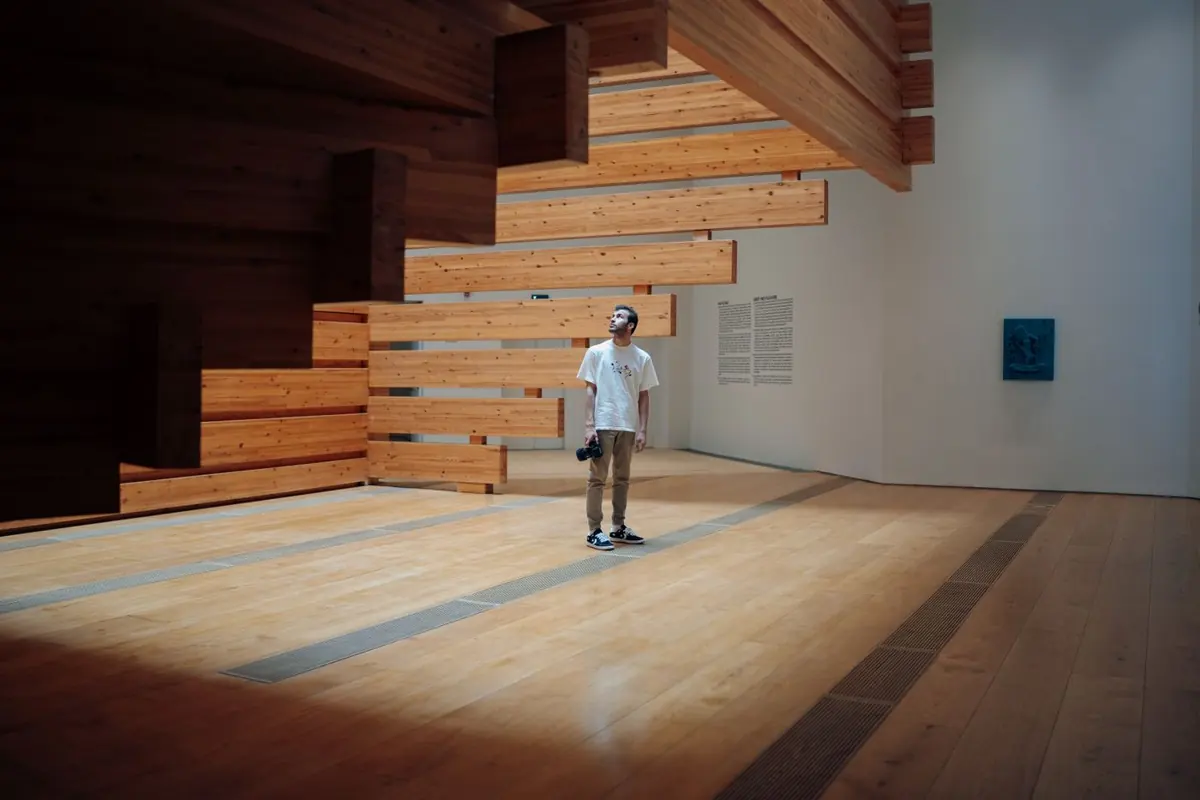
If you have only a few hours in a large museum, the most common failure is not missing a famous object. It is wandering through eight galleries without a clear reason, getting tired, and leaving with a vague sense that you saw a lot but learned little. A practical fix is to plan the visit around one question. The question does not need to be academic. It only needs to be specific enough that every gallery you enter either helps answer it or can be skipped without guilt.
This article walks through how to write that question, turn it into a route, and handle the trade-offs that come with a narrow plan. The approach can be adapted to a national collection, a design museum, a regional gallery, or a specialist venue. It is also useful for planning around opening hours that differ by building, which is a detail worth checking before you commit to a route. Museum websites often publish daily hours, late-opening days and notes about galleries closing earlier than the main building, so the plan should begin there.
Start with the reader problem, not the map
Most visitors begin by opening a floor plan and trying to cover the highlights. That method produces a checklist, and checklists are hard to enjoy. Thirty rooms in ninety minutes leaves no time to look, compare or notice what surprises you. A single question works better because it gives your attention a direction. Instead of asking “what should I see?”, you ask something like “how did this city change its idea of domestic furniture between two periods?” or “where do the same materials appear across different cultures?”
A good planning question has three features:
- It is specific. “Art of the 1700s” is a subject. “How did porcelain move from luxury import to everyday object?” is a question.
- It can be answered with objects you can physically find. If the answer depends only on a book you have not read, the museum will not help much.
- It allows you to ignore most of the building. A useful question narrows the visit. If it cannot exclude anything, it is probably too broad.
A worked example
Suppose you are visiting a large decorative arts museum for an afternoon. Your question is: How did printed patterns change the way ordinary households decorated their rooms? This is a hypothetical example, chosen to show the method rather than to describe any particular collection.
From that question you can derive three follow-up searches before you leave home:
- Which galleries are organized by material or by region rather than by chronology? (Those often hold the textiles, wallpapers and ceramics that carry pattern.)
- Does the museum have a room that shows interiors, such as period rooms or reconstructed domestic spaces?
- Are there temporary exhibitions on printing, textiles or design history that might connect to the question?
Now the route is almost obvious. You go first to the textile and ceramics galleries, then to any period interior, then to a print or drawing room if one is open. You can skip the furniture collection on the upper floor, the silver rooms, and the sculpture hall. You may still pass them, but you are not obliged to stop.
Turning the question into a route
Once you have the question, build the visit in four steps.
1. Check opening times and closures before you plan the route
A route that depends on a gallery you cannot enter is worse than no route at all. Many museums run different hours in different buildings, and some galleries close before the main building does. Museum visit pages often list separate hours for different buildings and note galleries that close earlier than the main building. Check the V&A’s visit page for its current site-specific hours and closing times. Such details matter if your route runs late in the afternoon. Check the current listing on the day you plan to go, because hours can change for events or seasons.
2. Sort the collection by relevance, not by floor
Make a three-column list: “essential for the question”, “useful if time allows”, and “skip”. Be honest about the middle column. Many visitors overfill it. Keep it to what you can realistically reach in the time you have. A rough guide is to limit the essential list to the number of galleries you can give fifteen to twenty minutes each, leaving time for transit inside the building and a pause.
3. Order the stops so that each one sharpens the next
The best sequence moves from broad evidence to close examination. Start with an overview gallery that shows the range, then visit the galleries that hold the specific objects, and finish with the room where the question feels most concrete. In the printed-pattern example, looking at a wide range of textiles first makes it easier to notice the one repeated motif later in a ceramics case.
4. Build in one deliberate pause
Narrow plans can feel rigid. Deliberately leave one unplanned stop, such as a room you pass on the way to the café, so that a stray object can interrupt the question. That is not a failure of the method. It is a check that the question is still interesting when it meets something unexpected.
Trade-offs to accept
| Choice | Benefit | Cost |
|---|---|---|
| Narrow question, few galleries | Deeper looking, clearer memory of what you saw | You will miss highlights outside your topic |
| Broad question, many galleries | Wider coverage and more surprises | Shallower attention, more fatigue |
| Full route with timings | Efficient use of limited time | Less room for wandering |
| Loose route with one question | Flexibility and serendipity | Risk of drifting without a sense of direction |
Narrow planning also has limits. It assumes the collection holds enough material to answer your question. Some museums are strong in one area and thin in another. If the first gallery reveals little relevant material, adjust the question rather than forcing the route. A question such as “how did domestic decoration change in this city?” may become “which materials dominate the local collection?” That is still a useful visit.
Common mistakes
- Choosing a question you can only answer by reading labels. Labels help, but the point is to compare objects. If every gallery requires reading long texts, slow down and pick fewer rooms.
- Ignoring the building’s layout. A route that zigzags across floors wastes time. Look at the plan and group stops by floor.
- Treating the question as a test. You are not required to find a neat answer. A visit that complicates your question is still a successful visit.
- Planning for a full day in a two-hour window. Estimate conservatively. Museum fatigue arrives sooner than people expect, especially in galleries with low light and long corridors.
- Forgetting the exit. Know which entrance or shop you will use at closing time, and whether any galleries close earlier than the building.
Questions to ask before you go
- Is my question specific enough to exclude at least half the building?
- Can I find that question’s answers in objects on display today, or only in archives or books?
- Does my route fit the opening hours for each part I plan to visit?
- What is my one unplanned stop going to be?
After the visit
Write down the answer you reached, even if it is partial, and one object that complicated it. A paragraph of notes is more useful later than a photograph archive. If your question surfaced something you want to pursue, a book, a catalogue or a return visit to a temporary display will give you a second route built on the first.
For opening hours, gallery closures and visitor information, consult the museum’s own visit page on the day you plan to go, such as the V&A’s visit planning page, which lists the hours for its London, Dundee and Stoke-on-Trent sites.
Related resources
Cover: Pexels photograph, used as an editorial illustration. Stock models and products shown do not imply endorsement or independent product testing. Image license.