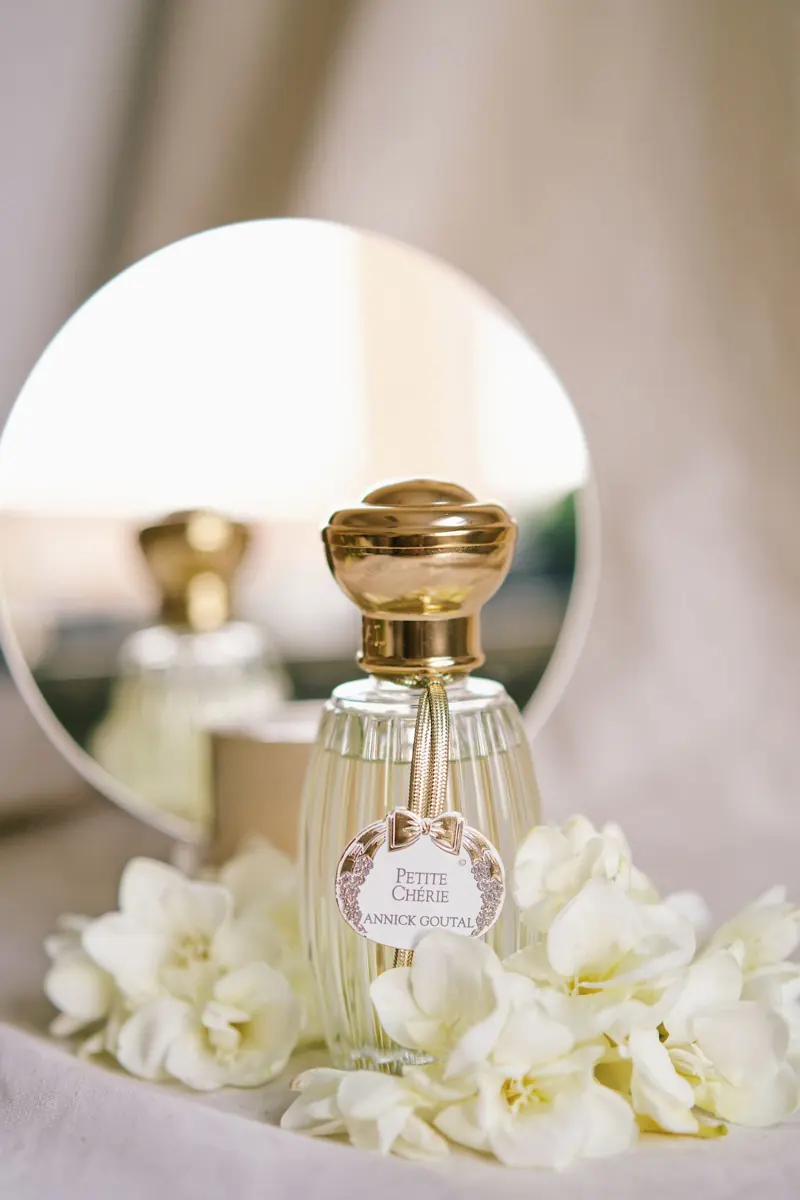
The short answer: when you buy fragrance as a gift for someone you don’t know well, stop trying to guess their taste in a single bottle and instead narrow the decision with three observable clues, a safe default scent family, and a small set of rules that protect you from the most common mistakes. You do not need to be a perfumer. You need a method that turns vague impressions into a choice you can defend.
Picture the moment. You stand in front of a shelf of bottles with names you cannot pronounce, you smell a paper strip that tells you almost nothing once it has dried, and you worry that a wrong choice will read as careless. Fragrance is one of the most personal categories a person can wear, which makes it feel risky to buy for someone else. Yet it is also a category where a thoughtful, low-risk gift is achievable, because the variables that matter can be reduced.
Why fragrance gifts feel riskier than they are
Most people who hesitate over a fragrance gift are reacting to three real difficulties. First, scent is subjective and hard to describe. Two people can use the same words for a scent and mean different things. Second, the smell you experience at the counter is not the smell the wearer will live with, because a fragrance changes over the hours after it touches skin, and body chemistry affects how it develops. Third, the wearer may already have a signature, and a new bottle can end up unused on a shelf.
The practical response is not to find the “perfect” fragrance. It is to lower the stakes. A gift that is pleasant, widely wearable, and easy to return or exchange is usually a better decision than a daring choice that only works if your guess is exactly right.
Step one: collect three clues about the recipient
Before you think about notes or bottles, gather evidence from the person’s existing life. You are looking for patterns, not a single favorite.
- Their current products. If they own a candle, body lotion, or hand cream, note the smell. Home and body products often share a family with a fragrance they would enjoy.
- Their clothing and environment. Someone who wears mostly neutral, structured clothes and works in a quiet office may prefer something restrained. Someone who loves bold colors and travels often may respond to a more expressive scent. This is a loose signal, not a rule.
- What they comment on. People often praise a fragrance they encounter in others. Listen for specific remarks, such as “I love how the air smells when you walk into a room.”
Write down what you find in plain words. Avoid writing “fresh” or “sweet” unless you have a concrete example. Concrete examples are more useful than adjectives.
Step two: choose a scent family you can defend
Fragrances are commonly grouped into families such as fresh, citrus, floral, woody, and warm or resinous. You do not need technical vocabulary. You need a family that matches your clues and that is broadly tolerated.
| Clue you observed | Family to consider | Why it is a lower-risk pick |
|---|---|---|
| They wear neutral, minimal clothes | Fresh or citrus-leaning | Tends to read as clean and suits many settings |
| They like cozy home products | Warm woody or soft amber | Matches the comfort they already choose |
| They compliment floral smells | Light floral | Pick a soft, less heavy version to avoid overpowering |
| No clear pattern | Soft fresh-woody | Sits between categories and is widely acceptable |
The table is a starting point. Its purpose is to keep you from jumping to the boldest option on the shelf. When in doubt, the middle of the spectrum is safer.
Step three: decide between a full bottle, a small size, or a set
The format matters as much as the scent. A full bottle signals confidence and commits the recipient to your choice. A smaller bottle or a discovery-style set lets them try it without feeling obliged. Gift sets can be useful when you are truly uncertain, although they can also contain scents you did not select, so check what is included before you buy.
If the recipient is someone you know well and you have seen them wear a fragrance, a full bottle of that same product is often the most reliable gift. If you are guessing, a smaller size or a set reduces the cost of a miss.
Worked example
Illustrative example, not a recommendation of any specific product: Suppose you are buying for a colleague named Dana. You notice that she keeps a lemon-scented hand cream at her desk, she wears plain navy and white clothes, and she once said she loved the smell of a friend’s cedar-lined closet. Your clues point in two directions: clean citrus and quiet woods.
Your decision process might look like this. First, you note that the clues overlap in a “fresh with a woody base” family. Second, you choose the soft middle rather than an intense citrus or a strong cedar. Third, because you are not certain, you pick a smaller size instead of a full bottle, and you keep the receipt. The result is a gift that matches her observed habits, carries low risk, and can be exchanged without embarrassment if it does not suit her.
Notice what this example did not require: a perfect knowledge of her taste, a long shopping trip, or a strong opinion about notes. It required a repeatable method.
Common mistakes
- Judging by a paper strip alone. A fragrance on paper is only a rough preview. It can smell different once it mixes with skin.
- Buying your own favorite. A scent you love may be too strong or too unusual for someone else.
- Choosing the most intense option. Strong fragrances can be hard to wear in shared spaces. Subtle choices are easier to accept.
- Ignoring the receipt. Even a careful guess can miss. Include a gift receipt or note where the item was bought, if the store permits.
- Over-explaining the choice. A short, warm note is better than a long description of the notes.
Limitations of this approach
This method reduces risk but does not eliminate it. Scent preference can change with seasons, moods, and life stages. Some people are sensitive to fragrance and may prefer unscented products; if you know this, skip fragrance entirely. Others have strong associations with a smell from childhood, and no clue you collect will reveal that. Accept that some uncertainty remains and plan accordingly.
Also remember that this is editorial guidance from research, not a product test. It is designed to help you structure a decision, not to predict exactly how a specific fragrance will perform on a specific person.
A short checklist before you buy
- Write down three observable clues about the recipient.
- Pick one scent family that fits those clues and avoid the extremes.
- Choose a format: full bottle if you know their taste well, smaller size or set if you do not.
- Check that a gift receipt or exchange option is available.
- Write a short, specific note that mentions why you chose it.
A fragrance gift becomes less intimidating once you treat it as a structured decision rather than a test of intuition. The goal is not to read someone’s mind. It is to choose something pleasant, defensible, and easy to live with.
Related resources
Cover: Pexels photograph, used as an editorial illustration. Stock models and products shown do not imply endorsement or independent product testing. Image license.