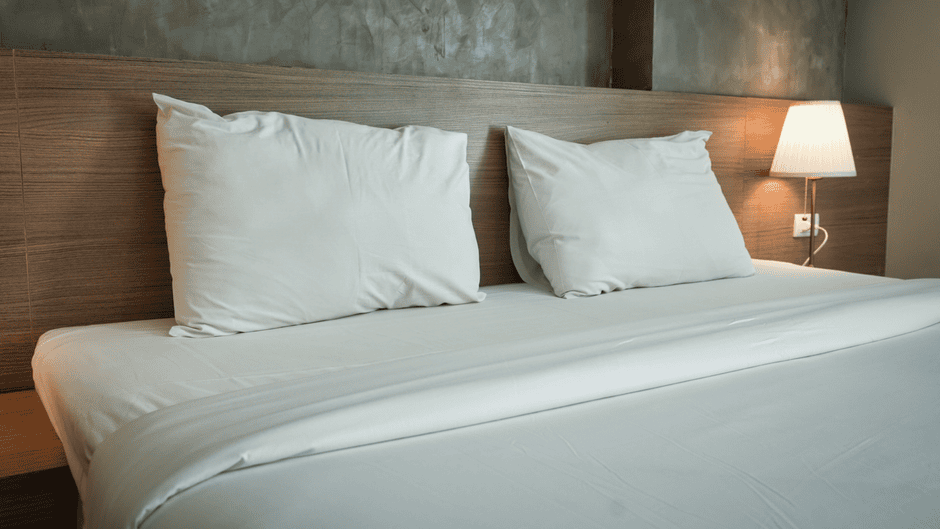
A mattress topper is a removable layer that sits on top of the mattress, under the fitted sheet. It is a useful way to change feel without replacing the whole bed — and it is also a common way to make a room hotter, a sheet looser, or a guest bed oddly uneven if you pick the wrong construction.
This is a research buying guide, not a sleep-lab test. Top Cool People has not scored a ranked list of toppers for this article. Use it to decide thickness and material, then confirm the product’s dimensions against your mattress, including depth. For the sheet and pillow layer that goes over it, see how to choose bed linen by fiber, weave, and care. If you are refreshing a rented room and want changes you can take with you, the rental-friendly room refresh is a related read, as is planning room lighting before buying another lamp.
Start with the problem, not the loft
People buy toppers for different complaints, and those complaints want different products:
- The mattress is too firm. You want cushioning and pressure relief at the shoulders and hips, usually from memory foam, latex, or a fiber or down-style cushion — not necessarily the thickest pad in the shop.
- The mattress is too soft, or it sags in the middle. A plush topper will not fix a broken support core. A thin, denser pad can slightly even a surface; a collapsing mattress needs repair or replacement, not more stuffing.
- The bed sleeps hot. Thick, dense memory foam is a frequent heat trap. Look at latex, wool, or a thinner, more breathable cushion, and be skeptical of a “cooling” cover that sits on a solid foam slab.
- You want a hygienic, washable layer for guests, allergies, or a dorm-style mattress. A quilted, machine-washable pad may matter more than a four-inch foam slab you cannot clean.
A topper is not the same as a mattress pad or a waterproof protector. A pad is usually thinner and is there for cleanliness and a slight softening. A protector is there for spills. You can stack a protector and a topper, but every added layer makes fitted sheets tighter and can shift during the night if nothing is anchored.
Thickness and density
Consumer toppers commonly range from about one to four inches. Thicker is not automatically more comfortable. A two-inch layer can change the feel of a slightly firm mattress without making getting out of bed feel like climbing a sofa. A three- or four-inch memory-foam topper will dominate the feel — for better or worse — and will need a deep-pocket fitted sheet.
For foam, density matters as much as height. Very low-density foam can feel pleasant for a few weeks and then body-impress. Higher-density foam usually holds its shape longer and costs more. Manufacturers do not all report density the same way, so treat a published number as a clue and look for a usable trial period and a weight or density callout you can compare inside one brand’s lineup.
If two people share the bed and only one wants a softer surface, a topper is a compromise layer. It will change both sides. That is a reason some couples skip a full topper and look at a mattress with better zoning, or at pillows and linen first.
| Material | Typical feel | Heat and care notes | A reasonable use |
|---|---|---|---|
| Memory foam | Contours, slower rebound, strong “hug” | Often sleeps warmer; usually spot-clean or has a removable cover, not a fully washable core | A too-firm mattress when heat is not already a complaint |
| Latex (natural or synthetic) | Bouncier, more responsive than memory foam | Often more breathable than solid memory foam; check latex allergy if that is relevant for you | Cushion with an easier roll-over, when you dislike a stuck feeling |
| Wool | Cushioned but less “sink” | Wool is widely used for temperature buffering and moisture management; follow the maker’s clean instructions, which may not be a home wash | Hot sleepers who want softness without a thick foam slab |
| Down or down-alternative fiber | Plush, hotel-like loft | Can sleep warm if overfilled; many fiber pads are washable, which is a practical advantage | A guest bed or a slight softening when you want something you can launder |
| Thin quilted pad / protector | Minimal change in feel | Usually the easiest to wash | Hygiene and sheet grip, not a major comfort redesign |
Heat, fit, and the sheet problem
Heat builds when air cannot move and when a dense foam sits close to the body. If you already kick off the duvet, do not automatically add three inches of memory foam. Wool, latex, or a thinner pad is the more coherent experiment. A “gel-infused” label can help at the surface; it will not automatically cancel a thick, slow foam. Keep expectations modest.
Measure the mattress width and length, then the depth with the topper on, before you buy new fitted sheets. A topper that is even slightly small will drift toward the foot of the bed. Some designs use elastic straps or a fitted skirt; those are worth having on a slick mattress surface. If the topper smells strongly of new foam when it arrives, air it in a ventilated room according to the manufacturer’s instructions before you sleep on it. Off-gassing complaints are common with some foams; they should fade. A trial window is useful here.
Children’s sleep products and infants are a separate safety topic. Do not add a thick, soft topper to an infant sleep surface in a way that conflicts with current safe-sleep guidance. This article is about adult and general household beds.
Top Cool People verdict
Choose a mattress topper for a specific complaint: a little cushion on a firm bed, a cooler material if you already sleep hot, or a washable pad for cleanliness. Let thickness stay in the range that changes feel without swallowing the mattress, and match the material to heat as carefully as you match it to softness. Measure for sheets and for a secure fit. If the mattress itself is sagging, spend the money on support, not on another layer of foam. Then put a fitted sheet and a linen setup over the topper that you can actually wash and live with.
FAQ
Will a topper make a cheap mattress feel like a new one?
It can improve the surface feel. It cannot restore collapsed coils or a hammocked middle. If you sink toward the center, address the mattress, not only the top layer.
How thick should a memory-foam topper be?
Two inches is a common starting point for a noticeable but not dramatic change. Go thicker only if you already know you want a deep cushion and you have deep-pocket sheets. There is no single medically required thickness for adults.
Can I use a topper on a sofa bed or a guest air mattress?
A thinner, washable pad is usually easier than a heavy foam slab, which can slip and is awkward to store. Confirm the unfolded size and whether you can air the foam after guest use.