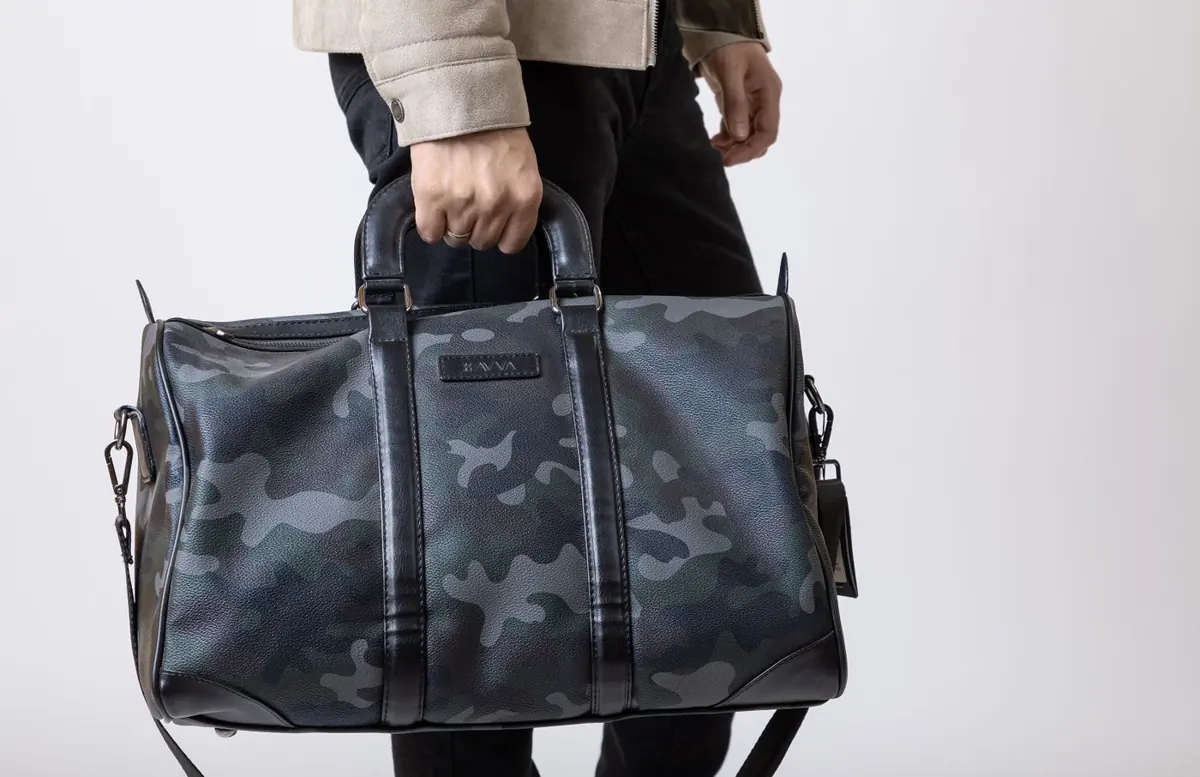
Editorial note: This is a practical planning guide based on comparison criteria and published checklists, not a hands-on product test. Some merchant links on this site may earn a commission.
The short answer: choose the bag that fits your normal load without force and carries comfortably through the hardest part of your typical trip. Capacity numbers on a product page rarely tell you that. A bag can advertise generous volume and still feel cramped because the opening is narrow, the padding bulks up the interior, or the handles dig in after ten minutes. This guide walks through a method for choosing a weekend bag that starts with what you actually carry, then tests the bag against your real route.
Start with the load, not the label
Before you look at any bag, lay out a realistic two-night load on a bed or table: clothing, underwear, toiletries in the containers you normally use, chargers, and any extra pair of shoes. Include a laptop only if it genuinely travels with you on this kind of trip. This pile is your reference object. Every candidate bag should be judged by whether it holds this pile comfortably, not by a volume figure.
Pay attention to shape as well as quantity. Rigid toiletry bottles, a folded jacket and a pair of shoes behave differently from soft folded shirts. A bag with a wide top opening accepts awkward items more easily than a bag with a narrow zip that forces you to compress everything.
Choose the carry style around the hardest transfer
Three common formats serve different routes:
- Duffel: Good for car trips and short transfers. The broad opening makes clothing easy to reach, but the weight sits on one shoulder or in one hand unless the strap is well padded.
- Backpack: Often easier on stairs and longer walks, provided the straps fit your torso and the load stays close to your back. Access to the main compartment can be slower in crowds.
- Small rolling case: Removes weight from your shoulders on smooth floors, but adds its own weight and becomes awkward on stairs, gravel and uneven platforms.
The useful question is not which format is best in general but which one handles the most difficult part of your route. Consider this worked example (hypothetical): you drive to a station, climb two flights of stairs, then walk ten minutes to a hotel. A duffel may be fine in the car but tiring on the stairs. A backpack may handle the stairs but feel bulky in a crowded carriage. A rolling case may be easy on the walk but frustrating on the stairs. Whichever you pick, test it against that exact sequence.
Measure the packed bag where it is widest
Measure the bag when it is full, not empty. Include handles, wheels and any pocket that bulges outward. A soft bag may look like it fits a size limit when flat and exceed it once loaded. A common mistake is trusting a label such as “weekender” or “carry-on” as proof of acceptance. Those words describe a marketing category, not a guarantee.
If you plan to fly, check the operating carrier’s current dimension and weight rules before you travel, since conditions can vary by fare and route. The U.S. Transportation Security Administration’s travel checklist notes that liquids in carry-on bags must follow the 3-1-1 liquids rule, which affects how you plan toiletry storage and where it sits inside the bag. Check the current rules directly with the agency or your carrier rather than relying on older guidance.
Carry the full load for ten minutes
Load the bag to your normal weight and perform the routine you expect: walk, switch hands, climb stairs, put on a jacket and pick the bag up from the floor. Several checks reveal problems that a shop floor test misses:
- Does the padded shoulder strap stay in place without constant adjustment?
- Do the handles press into your fingers, or do they remain tolerable after several minutes?
- In a crossbody position, does the bag swing against your legs when you walk?
- For backpacks, can the straps tighten enough for your torso, and does the back panel create a hard edge?
If you can only test an empty bag in a shop, buy it only if the return window lets you repeat the test at home with a full load.
Decide which pockets earn their place
Pockets are where many bags look better than they perform. Ask what you will retrieve during transit and where it should live:
- Quick-access pocket: Useful for a ticket, earphones or a card. If it is too shallow, items fall out when you lift the bag.
- Shoe compartment: Separates dirty footwear from clothing, but it consumes room in the main compartment. Test it with the shoes you actually bring.
- Laptop sleeve: Only useful if the internal dimensions and base protection suit your device. Do not assume a sleeve label guarantees fit.
- Exterior bottle pocket: Check whether a bottle stays secure when the bag is set down or carried over the shoulder.
A limitation to keep in mind: many small pockets can slow packing. If you spend the trip searching for where something went, the bag is working against you.
Inspect the failure points
Look closely at the joins between handles and body, the zipper path around corners, and any exposed seams at the base where the bag contacts the ground. Open and close the zips while the bag is loaded; a zipper that snags under pressure is a poor sign. Check whether the lining catches on zip teeth and whether metal hardware presses against your back or hip.
Material choice involves trade-offs. A structured leather bag can look refined but may need more care in wet conditions and weigh more than you want. A lightweight fabric bag can be easier to clean and carry but may sag or lose shape when partly empty. Read the care instructions and warranty exclusions before paying for a material, and consider what the bag will be exposed to in your typical week.
Common mistakes
- Buying for the best-case trip. A larger bag chosen for one occasional journey often becomes a burden on ordinary days. Keep a separate plan for specialist trips.
- Comparing bags empty. Empty bags feel roomy and light. Compare them packed with the same items on the same route.
- Ignoring the opening. A deep bag with a narrow zip can be harder to use than a shallower one with a wide mouth.
- Trusting capacity alone. Two bags with similar stated volume can differ greatly in usable space.
- Upgrading the bag instead of reducing the load. If a bag is uncomfortable at your normal weight, removing one item often helps more than moving to a more expensive model.
A worked comparison
Suppose you are choosing between a duffel and a backpack for a two-night trip. Use the same packed items for both, including the shoes and toiletries. Then run the same route: car, stairs, a ten-minute walk, and a crowded transit car. Record the results in a simple table.
| Check | Duffel | Backpack |
|---|---|---|
| Packed items fit without force | Note result | Note result |
| Comfort on stairs | Note result | Note result |
| Comfort after ten minutes | Note result | Note result |
| Access to items mid-transit | Note result | Note result |
| Fit within your carrier’s rules | Verify | Verify |
The option that scores best on the hardest transfer and still fits your load is usually the better choice, even if the other bag looks more impressive in the shop.
Questions to settle before you buy
- Which part of my usual route is the most physically demanding?
- Do I need the bag to pass a specific carrier’s dimension or weight rules?
- Will I use the bag mostly for transit, or also as an everyday item?
- Can I return the bag if the full-load test fails at home?
The final decision
Choose the smallest bag that holds your normal load without strain and carries comfortably through the hardest transfer. If two candidates both pass, compare them with the same packed items and the same route. If neither is comfortable, reduce what you carry before moving up a price tier. The right bag is the one you can pack, carry and clean without rearranging the rest of your routine.
Prepared by Top Cool People Editorial. Guidance is based on practical comparison criteria and published checklists; it does not imply personal testing or celebrity endorsement.
Related resources
- Travel Checklist
- eTools : Computer Workstations – Checklists – Purchasing Guide | Occupational Safety and Health Administration
Cover: Pexels photograph, used as an editorial illustration. Stock models and products shown do not imply endorsement or independent product testing. Image license.