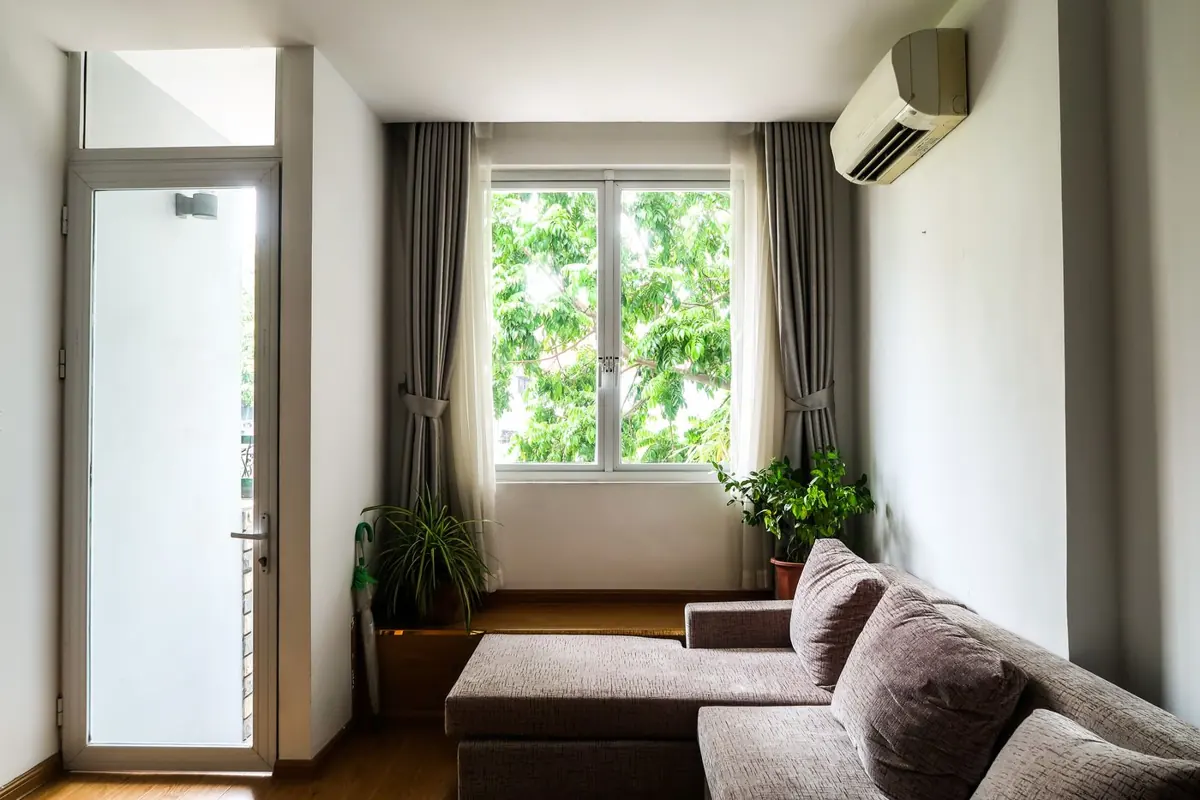
Making a home easier to host usually comes down to three things guests feel within the first ten minutes: where to put their coat and bag, whether there is somewhere comfortable to sit and talk, and whether the light lets everyone move, see and read without squinting. Most small improvements that solve these problems cost little or nothing because they rearrange what you already own. The practical approach is to start from the guest’s route through your home, identify the friction points, and fix the most frequent ones first.
This guide is researched editorial guidance, not a hands-on test of products. It focuses on the decisions behind three upgrades: the entryway, seating and light. The examples are hypothetical and meant to show how the reasoning applies.
Start with the guest route, not the shopping list
Before buying anything, walk the route a guest takes from the front door to the room where you will gather. Note every point where someone pauses, asks a question, or stands holding something with nowhere to put it. Those pauses are the real problems. Common ones include a coat with no hook, a glass with no surface, a chair that blocks the way to the kitchen, and a lamp that leaves the stairs in shadow.
A useful method is to ask one friend to try the route while you stay quiet. Record only the moments they hesitate. Two or three repeated hesitations are a clearer brief than any style board.
The entryway: a landing point, not a display
The entryway has one job when guests arrive: give them a place to put down coats, bags and sometimes shoes without blocking the walkway. A landing point can be a few hooks on an existing wall, part of a wardrobe, or a single shelf. A large console table is not required, and it can make a narrow hall harder to pass through.
If you ask guests to remove shoes, make that expectation visible at the door and provide a bench or a clear space to sit while changing. Keep a small tray or basket only if it solves a recurring problem, such as keys disappearing or umbrellas dripping onto the floor.
Illustrative example: A hallway about a metre wide had a freestanding coat stand placed near the door. Guests kept catching their bags on it while passing the stairs. Moving the stand to a short wall with two hooks, one at adult shoulder height and one lower, cleared the walkway and gave guests two obvious places to hang things. No new furniture was bought.
Seating: test the whole conversation
Seating decisions fail most often because they are judged from a single chair. Sit in every position you plan to offer, then imagine a dinner that runs for two hours. Is the seat comfortable for that length of time? Can someone reach a glass without balancing it on a cushion or a thin armrest? Can they stand up without bumping into another piece?
Mixing chairs is acceptable when the heights are compatible and the upholstery or finish is reasonably consistent. Decorative stools are often fine for brief visits but tiring for long conversation. Check access needs by asking guests in advance rather than guessing from the room layout.
Common seating mistakes
- Placing a seat directly in the path between the living area and the kitchen or bathroom.
- Choosing low, deep sofas as the only option for guests who may find them hard to get out of.
- Leaving no surface within arm’s reach of each seat.
Light: serve movement and reading, then atmosphere
Evaluate lighting at the time guests will actually arrive. Turn the room to the setting you plan to use, then walk it. You need to see steps, doorway thresholds, the drinks area and any printed menu or label without strain. A lamp that creates a pleasant seating pool can still leave a corner too dark for someone to find the bathroom.
Try repositioning existing lamps before buying new ones. A lamp moved from a corner to beside a seating area often solves more than an extra fixture. Route cords away from walkways and keep lamps on stable surfaces. If you use candles, follow fire safety precautions and consider whether an open flame suits the space and the people in it.
Comparing the three upgrades
| Area | Usual problem | Low-cost first step | Main trade-off |
|---|---|---|---|
| Entryway | Coats and bags land on the floor or chair | Add hooks or clear one wall section | Uses wall or wardrobe space that may be needed elsewhere |
| Seating | Chairs are uncomfortable or in the wrong place | Rearrange and test existing seats for a full evening | Mixed seating may not match visually |
| Light | Dark corners or harsh glare | Move existing lamps and check the room after dark | Repositioned cords may need securing |
Limitations of this approach
Room layout, building rules and accessibility needs vary a great deal, so the sequence above is a starting point rather than a fixed plan. Renters may be unable to install hooks or change fixtures, but they can still use freestanding options and portable lamps. Households with young children, pets or limited mobility may need different priorities, such as stable seating heights or clear floor space. Treat any recommendation as something to test in your own home.
A practical order of work before a gathering
- Clear the walking routes from the door, to the seating area and to the bathroom.
- Set up the landing point for coats and bags.
- Arrange seating and check that every seat has a reachable surface.
- Set the light for arrival time and walk the route in the dark.
- Group glasses, water and drinks in one reachable place, leaving space for used glasses.
- Check that the bathroom has soap, a clean hand towel and spare toilet paper.
After the evening, note the one thing guests asked for or searched for. That single observation is more useful than a generic list of upgrades, and it tells you what to fix next time.
Questions to ask before buying anything new
- Does the problem happen at every gathering, or only with large groups?
- Can an existing object solve it if it is moved?
- Will the new item make a walkway narrower or a surface harder to reach?
Continue reading
- Conversation Games for Small Gatherings: Choose the Right Level of Play
- A Calmer Home Office: Fix Visual Clutter Without Hiding Your Work
- Best Coffee Table Books for Culture, Style, and Conversation
Prepared by Top Cool People Editorial. Guidance is based on practical comparison criteria and does not imply personal testing or endorsement.
Cover: Pexels photograph, used as an editorial illustration. Stock models and products shown do not imply endorsement or independent product testing. Image license.