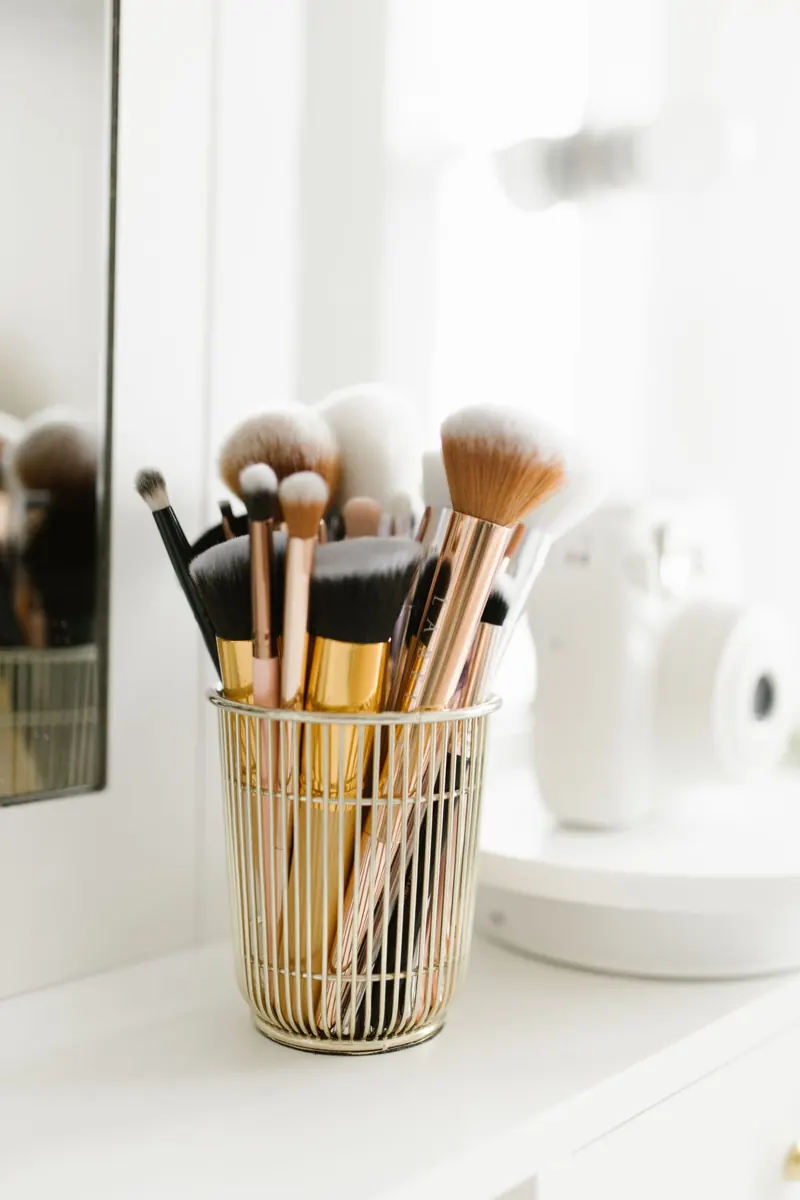
Most people choose makeup brushes by the color of the handle or the brand on the box, then wonder why their foundation streaks, their blush looks patchy, or their eyeshadow refuses to blend. The shape of the brush head is what controls how product lands on the skin. A dense, flat head pushes product into place with pressure; a fluffy, domed head diffuses it; a tapered point places it precisely. This article explains the main shape families in plain terms, shows how to match each one to the finish you want, and points out the trade-offs and common mistakes so you can build a small set of tools that does the job.
Start with the finish, not the tool
Before comparing brushes, decide what you are trying to achieve. Finishes vary along a few axes: how much coverage you want, how soft or defined the edges look, and whether the product sits on top of the skin or blends into it. A useful way to think about it is to ask three questions:
- Coverage: Do you want sheer, medium or full coverage? Denser brushes deposit more product.
- Edge: Do you want a hard line, as with eyeliner or contour, or a soft gradient, as with blush or bronzer?
- Placement: Is the product spread across a large area, or placed in a small one?
Brush shape answers all three. A large domed brush spreads product across a broad area with a soft edge. A small tapered brush places it in a narrow area with a sharper edge. A dense flat brush gives coverage and a more opaque, sometimes slightly dewy result depending on the formula.
The main shape families
Domed and fluffy heads
Domed heads are rounded, often with bristles of moderate density. They pick up product lightly and release it gradually, which makes them good for blending and for building color in layers. Use them for powder, blush, bronzer and eyeshadow transitions. The limitation is that they are poor at precision and can smudge product outside the intended area if you use too much pressure.
Dense flat or buffer heads
Flat, dense brushes have tightly packed bristles. They work foundation and liquid products into the skin using small circular or stippling motions. They give more coverage than a sponge in some cases, but they also show streaks if the product is applied in one direction or with too much product on the brush. Clean them often, because dense bristles hold residue.
Tapered and pointed heads
Tapered brushes narrow to a point. They are for placing product exactly: concealer under the eye, lip color, eyeliner, or the crease of the eyelid. Their trade-off is that the point holds less product, so you may need several light passes to build coverage.
Angled and synthetic-versus-natural considerations
Angled heads, shaped with a slanted edge, are useful for contour and brow work because the diagonal edge reaches into narrow areas. Bristle material matters too. Synthetic bristles are commonly used with cream and liquid products because they hold their shape when wet; natural fibers often pick up powder more readily. Performance differences between materials are not established by the sources cited here, so treat material as a practical preference to test yourself rather than a rule.
A worked example
Suppose you want a natural base with soft cheeks. A realistic starter set might include one dense flat brush for liquid foundation, one domed powder brush for setting, and one medium domed blush brush. The dense brush distributes foundation evenly; the powder brush picks up a small amount of loose powder and presses it into areas that tend to shine; the blush brush lightly tints the apples of the cheeks and blends the edge. In this example, you would not need a pointed brush at all unless you also wanted eyeliner or lip definition, at which point a tapered brush earns its place.
Matching shapes to common goals
| Goal | Shape to reach for | Main trade-off |
|---|---|---|
| Sheer, even base | Dense flat or buffing head | Can streak if overloaded |
| Soft powder setting | Large domed head | Spreads beyond target if pressed hard |
| Blush or bronzer blend | Medium domed head | Less precise on small areas |
| Eyeshadow crease | Small tapered head | Holds little product per pass |
| Eyeliner or lip line | Fine pointed or angled head | Needs a steady hand and clean tip |
| Contour | Angled head | Easy to over-apply on the edge |
Common mistakes
- Buying a full set first. Most routines use four or five shapes. Extra brushes often sit unused.
- Overloading the brush. Heavy loading is the most common cause of patchy or streaked results. Tap off excess and build in layers.
- Using the same brush for every product. Residue from cream products can affect powder finishes. Separate brushes for cream and powder give cleaner results.
- Ignoring cleaning. The American Academy of Dermatology describes washing makeup brushes regularly, roughly every 7 to 10 days, since brushes collect product residue, oil and bacteria. The same guidance favors rinsing the bristle tips rather than soaking the whole head, since soaking can loosen the glue that holds the head to the handle, and laying brushes flat to dry rather than upright.
- Confusing shape with quality. Price and packaging do not reliably indicate how a brush performs. Judge the head shape and condition.
Limitations of this guide
This is research-based editorial guidance, not a set of lab tests of individual brushes. Results depend on your skin, the formula you use, your technique and how well you clean your tools. If a product consistently irritates your skin, the brush is not the only possible cause, and a dermatologist is the appropriate person to consult.
Build a practical set
Start with the finish you want most often. Choose one brush for each main job: base, powder or blush, and detail. Add a tapered or angled brush only when you actually perform that task. Clean the set on a regular schedule and replace any brush whose bristles splay permanently, since misshapen heads lose the precision that made them useful in the first place.
Related resources
Cover: Pexels photograph, used as an editorial illustration. Stock models and products shown do not imply endorsement or independent product testing. Image license.