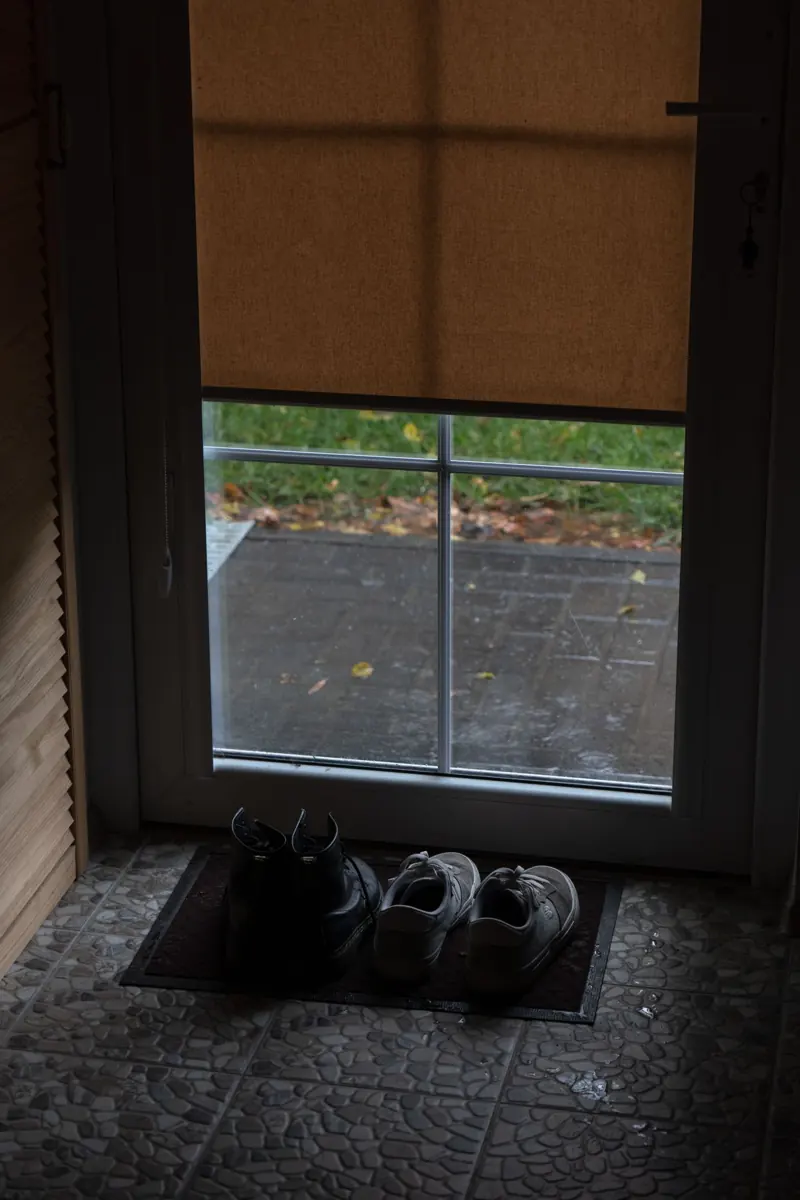
Why the entryway becomes a dumping ground
The entryway fails for a simple reason: it is the first place you put things down when you arrive, and the last place you think about when you leave. Keys go on the counter, a bag goes on the chair, shoes come off in a pile by the door. Within a few weeks the transition zone between outside and inside is holding objects that belong to five different routines. The fix is not a prettier hook or a bigger basket. It is giving each object a home that matches how you actually move through the day.
This guide is a practical walkthrough. It starts with a concrete method you can apply in an afternoon, then covers trade-offs, limits and common mistakes. It is based on general organizing logic and on researched guidance about caring for textiles and shoes, not on testing of specific products.
Start with the three daily objects
Almost every entryway problem comes down to three categories: keys and small electronics, shoes and outdoor footwear, and bags or coats that you carry in and out. Each one has a different frequency and a different reason it ends up in the wrong place.
- Keys and small items are needed in seconds, usually on the way out. They fail when the home is far from the door or when there is no fixed spot to return them to.
- Shoes are used in pairs, often wet or dirty, and need air to dry. They fail when there is no designated floor zone or when they stack up faster than they can be stored.
- Bags and outerwear are heavy, bulky, and come off at the point of maximum fatigue. They fail when there is no hook height that suits the person hanging them.
A one-afternoon reset
- Empty the zone. Remove everything from the entryway surfaces, hooks and floor. Put non-entryway items elsewhere in the house; do not sort them now.
- Count the traffic. For three days, note what goes in and out and at what time. You are looking for the top two or three items, not an exhaustive inventory.
- Map the reach. Stand at the door as if you were leaving. Note where your hand naturally goes for keys, a bag and shoes. That spot is your primary station.
- Assign one home per object. Each daily item gets exactly one place. Shared containers are fine, but two competing spots for the same thing guarantee drift.
- Test for a week. Leave the system in place and notice where objects still land. Those landing points tell you where the new home is in the wrong position.
Illustrative example
Consider a hypothetical household of two adults who leave through the front door around 8 a.m. and return after dark. One person carries a laptop bag and always removes their work shoes on the mat. The other carries a backpack and keys. Their log shows keys ending up on the kitchen counter two rooms away, while the bags land on the bench. The reset placed a shallow tray at hand height on the wall nearest the door for keys, moved the bench closer to the mat, and gave the backpack its own hook. Within a week the counter stopped collecting keys because the tray was now the first thing the hand met.
Choosing storage by what each object needs
Storage decisions are trade-offs. The table below summarizes common options against the three daily categories.
| Option | Works well for | Main limitation |
|---|---|---|
| Shallow wall tray | Keys, wallets, small electronics | Small items can slide off if the tray is too deep or the wall is not level |
| Hooks at two heights | Bags, coats, backpacks | Heavy loads can pull out of drywall without proper fixings; check the wall type first |
| Bench with open cubbies | Shoes and footwear that needs air | Wet shoes can leave marks on the bench surface |
| Closed cabinet | Off-season items, dusty shoes | Out of sight means out of mind; items get forgotten and crowd out daily use |
| Open basket on floor | Quick drop for things you use later | Becomes a catch-all within weeks if it has no defined purpose |
Shoes: air, wet and rotation
Shoe storage is the most frequent point of failure. Wet or muddy footwear placed in a closed cabinet stays damp and smells, while a pile on the floor blocks the walkway. A practical rule is to split shoes into two zones: a daily pair zone within reach of the door, and a rest zone for everything else. Shoes in the daily zone should be placed so air can reach them. Leave a gap between pairs rather than jamming them together.
If you own items that need a particular kind of care, follow the care label before drying them near a heat source. For background reading on general textile care, see the resource below; it is only loosely related to shoe storage.
Common mistakes with shoes
- Putting shoes that are still wet directly into a closed cabinet.
- Storing all shoes on the floor so the mat becomes unusable.
- Ignoring seasonal items until they are needed, then buying duplicates.
Bags and coats: height matters more than hooks
A hook is only useful at the height that the person hanging the bag can reach comfortably while carrying something. For most adults that means placing the main hook row at a height where the shoulder strap can drop without the bag scraping the floor. If several people share a hall, offer two heights. Keep hooks spaced so bags do not overlap. Heavy bags should hang from fixings that suit the wall; a hook that looks fine can tear out under load in plasterboard.
Limitations of a small entryway
Some entryways are too small to hold everything. A narrow hall may only allow a wall hook strip and one floor zone. In that case, prioritize the daily items and move seasonal gear to a closet, or accept that the entryway holds only what is used every day. A useful question to ask: if this object disappeared from the entryway, would the morning routine break? If not, it does not belong there.
Keeping the reset from drifting
A system survives when it has a single weekly review. Once a week, check the tray, the floor zone and the hooks. Move anything that does not belong back to its destination room. Replace broken fixings before they become a hazard. Note in your reset log any object that consistently lands somewhere else; that is information about where the home should move, not a failure of discipline.
Questions to ask before you buy anything
- Where does my hand go first when I leave, and is there a storage piece there already?
- What do I need in the first ten seconds of leaving, and what can wait?
- Will this item stay useful after the next season or household change?
Cover: Pexels photograph, used as an editorial illustration. Stock models and products shown do not imply endorsement or independent product testing. Image license.