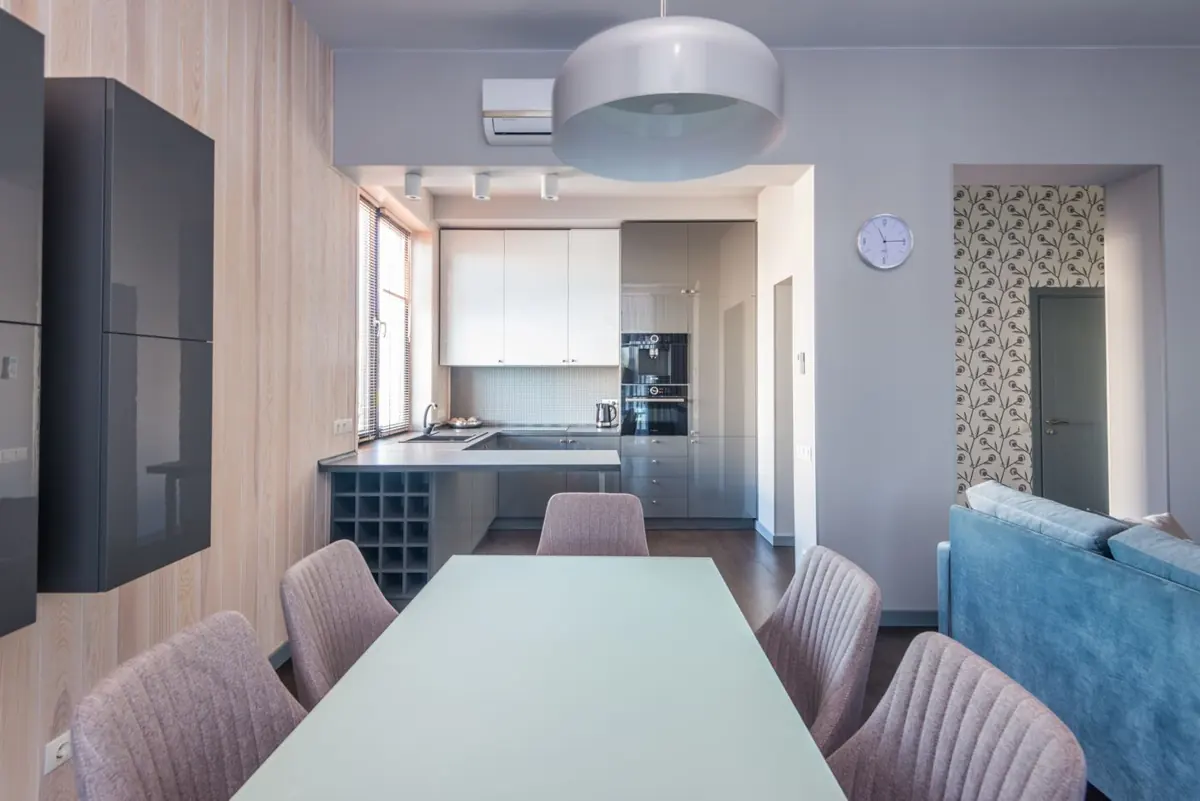
A dining table that fits a small room is not simply a smaller version of a large one. The real question is whether the table leaves room for people to sit down, stand up, pass dishes and walk past without turning every meal into a negotiation. Before comparing shapes or finishes, measure the chairs you actually use, the clearance behind them and the daily tasks the table must absorb, such as homework, laptop work, bill sorting or serving a family dinner. Get those numbers right and most of the buying decisions become straightforward.
Start with the job, not the showroom
Most small-space furniture problems come from buying for a single imagined scene, usually the dinner party, and then discovering that the table is used for six other things each week. Write down the three most common uses of the table in order of frequency. A typical list might be: weekday breakfast for two, a shared work surface in the afternoon, and dinner for four on weekends. The weekday tasks should drive the decision, because they happen far more often than hosting.
Once you have the list, note what each task demands:
- Seating: how many people sit at the same time, and whether they need arms, backs or stools.
- Surface: how much flat working area each place needs, including a plate, a glass and a laptop or notebook.
- Movement: whether people must slide chairs out, carry trays past the table, or open a nearby cabinet or door.
- Cleaning: whether the surface will see crumbs, spills, craft materials or wet dishes, which affects the finish more than the shape.
The clearance rule that matters most
In small rooms the constraint is usually not the table length but the space needed to use the chairs. Measure the room with the table outline marked on the floor using painter’s tape. Then check three zones: the chair-pull zone behind each seat, the walkway zone around the table, and the zone where a person would stand to serve or reach something.
Because clearance needs depend on your floor plan and the chairs you will use, test each arrangement physically rather than relying on a fixed rule. The practical test is simple: sit in each chair as if you were eating, then stand up and turn toward the walkway. If you have to shuffle sideways or move another chair to get out, the setup is too tight.
Worked example
Consider a hypothetical 2.4 metre by 3.0 metre dining nook with a doorway on one short wall. The owner wants seating for four. A round table seems ideal for a small room, but when the owner taped out a round table with four chairs, the chair backs reached the wall on one side and blocked the doorway swing. Switching to a rectangular table of a similar footprint with two chairs along the wall and two on the open side solved the problem, because the chairs could be pushed against the wall when not in use and the doorway stayed clear. The lesson is that shape should follow the room’s openings and walls, not just the number of seats.
Choose the table shape by traffic pattern
| Shape | Works well when | Main limitation |
|---|---|---|
| Round | The room is compact and people approach from many directions | Harder to fit against a wall; seats can crowd a doorway |
| Rectangular | One long wall is available and you need a fixed place for work | Corners can be awkward to reach |
| Drop-leaf or extendable | You host occasionally but need a smaller footprint most days | Mechanism and leaves add weight and may wear over time |
| Bench-style or banquette | Seating is limited by the wall and you want compact capacity | Less comfortable for long meals; harder to rearrange |
A round table with a pedestal base often gives a cleaner walkway because no leg sits in the corners, but it can make seating for an uneven number of people harder to balance. A rectangular table pressed against a wall saves the most floor area for daily use but needs chairs that can stack or tuck neatly.
Seating: fewer, better chairs usually beat more chairs
Adding a fifth chair to a small table often looks efficient on paper and fails in practice, because every extra chair shortens the chair-pull distance for everyone. Plan for the number of people who sit together on an ordinary day, then decide whether the occasional extra guest can use a stool, a bench or a moved-in side chair. Chairs with backs lift the comfort of long meals but take more depth; armless or lightweight chairs slide under the table more easily and clear the walkway faster.
Surface and finish for daily tasks
The finish determines how the table handles the tasks you listed earlier. A matte or satin surface hides fingerprints better than a high gloss, while a surface that resists liquids reduces the anxiety of spills during homework or craft sessions. Read the care instructions for any treated or finished surface and follow them, because cleaning products that suit one finish can dull another. The general principle is that the surface should be cleaned with methods the manufacturer specifies, and abrasive cleaners should be avoided unless the label allows them.
Common mistakes
- Measuring the table but not the open chair footprint, then discovering the chairs cannot be pulled out.
- Choosing a glossy finish for a table used daily for crafts or homework.
- Buying an extendable table for occasional hosting and then leaving the leaves in storage, so the daily footprint is still too large.
- Ignoring the doorway swing and the path to the kitchen when placing the table.
- Assuming a table that looks proportional in a catalogue will fit once the chairs, rug and lighting are added.
Limitations of this guide
This is editorial guidance based on planning principles and published care resources, not a test of individual tables. Materials, mechanisms and finishes vary widely, so check the manufacturer’s dimensions, weight limits and care instructions before buying. Room conditions such as floor slope, radiators and window swing also affect what works.
Practical checklist before buying
- List your three most frequent uses of the table.
- Tape the table footprint on the floor and sit in each chair position.
- Check the doorway and kitchen path with the chairs pulled out.
- Confirm the surface and textiles can be cleaned with methods you will actually use.
- Decide how the table will be used for occasional guests before choosing an extendable model.
Questions to ask yourself
- Do most of your meals involve the same number of people?
- Which chair must be pulled out most often, and does it block a path?
- Would a fixed table with a clear walkway serve you better than an extendable one?
Cover: Pexels photograph, used as an editorial illustration. Stock models and products shown do not imply endorsement or independent product testing. Image license.