The short answer: pick accessories that are quiet in finish, reliable in use, and easy to maintain
Quiet status accessories work best when they disappear into your routine. A bag that holds your laptop, charger, and notebook without strain, a watch you can read at a glance, a cardholder that does not bulge, and a small organizer that keeps cables from tangling all signal care without asking for attention. In practice, the difficulty is usually not a lack of options. It is that most shopping advice tells you what looks expensive, while your actual day involves a commute, a client meeting, a gate change, and a bag that gets opened fifteen times before lunch.
This guide is editorial research based on general guidance, not hands-on testing. It offers a checklist you can apply to any item in this category, with the reasoning behind each check and the trade-offs you should expect. Where we refer to workplace or travel guidance, we point to the published sources listed at the end.
Start with the job, not the look
Before comparing anything, write down three recurring situations: where you work, how you move between places, and what you carry on a typical day. A remote worker who moves between cafes and airports needs different accessories than someone who sits in one office and attends occasional events. The accessory that suits one person can be a daily irritation for the other.
A useful exercise is to list every item you reach for in a single day and mark how often each one comes out. Items used several times a day deserve the most attention to fit and finish. Items used once a month can be simpler, cheaper, or shared.
Example: a two-city week
Hypothetical example: A consultant works from home on Monday, travels to a client site on Tuesday and Wednesday, and flies home on Thursday. Her daily carry includes a laptop, a charger, a notebook, a cardholder, and a pair of earbuds. On the flight day she needs a bag that fits under a seat and a way to reach her boarding pass without unpacking. A bag that looks elegant but forces her to dig through the main compartment will feel like the wrong choice by Wednesday, however good it looked on Monday.
A checklist for inspecting any quiet accessory
Use this checklist in a shop, on a product page, or when reviewing something you already own. Each check includes the reason it matters.
1. Does the size match the load you actually carry?
- Load your real items into the bag or organizer before deciding. Empty bags always look roomy.
- Check whether the internal layout keeps a laptop, charger, and notebook from fighting each other.
- Consider how the item looks when full, not just when packed for a photo.
2. Can you reach what you use most without unpacking?
- Identify the two or three items you need fastest: boarding pass, transit card, keys, phone.
- Test whether they sit in a pocket you can open one-handed while standing.
- Avoid designs where the most-used item sits at the bottom of a deep, single compartment.
3. Does it hold its shape when partly empty?
A structured bag that collapses when half-filled looks tired quickly. A cardholder that slides apart or a wallet that bulges after a month signals weak construction. Press on the item, load it lightly, and watch how it settles.
4. Are the hardware and stitching placed where stress falls?
Look at the points that bear weight: handle attachments, zip ends, strap anchors, and corners. Reinforced stitching at these points usually matters more than the surface material. Zips should run smoothly, and the pull should not feel like it will snap off.
5. Can it be cleaned, repaired, or replaced in parts?
Accessories that you carry daily pick up dirt, pen marks, and wear. Before buying, check how the material responds to a damp cloth and whether replacement straps or fasteners are available. An item you cannot maintain becomes a disposable item at a higher price.
6. Does it work with the rest of your wardrobe and kit?
Quiet accessories succeed by repetition. A neutral bag or watch that matches several outfits will earn more use than a striking piece that suits only one. Test it against your three most common outfits.
Trade-offs to expect
| Priority | What you gain | What you give up |
|---|---|---|
| Minimal design, few visible details | Easy to match and quiet in any room | Harder to find pockets and tools quickly |
| Structured shape | Looks finished and protects contents | Less flexible; may not fit tight overhead bins |
| Premium leather or fine materials | Ages well and feels solid | Needs care, can mark or stain, and costs more to replace |
| Many internal pockets | Organizes small items clearly | More places for things to get lost; more weight |
| Lightweight fabric | Comfortable on long days | May look casual in formal settings |
Travel and liquids: check the rules before you pack
Accessories designed for travel, such as organizers and toiletry cases, need to match the screening rules you will face. The 3-1-1 liquids rule for carry-on liquids, gels and aerosols is a common requirement, so a clear, resealable bag is a practical item to keep in an organizer rather than buried in a bag. Check the current rules for your departure airport and carrier before you travel, since requirements can differ by country.
Desk and workstation accessories: fit the body first
Common mistakes
- Buying for the photo. A product that looks ideal on an empty surface often fails when loaded.
- Ignoring the second-most-used item. Teams focus on the bag and forget the cardholder or charger pouch that gets opened twenty times a day.
- Choosing delicate finishes for daily carry. Pale or highly polished surfaces show wear. Decide whether you accept patina or prefer a surface that resists marks.
- Overbuying organizers. Extra compartments are only useful if you have items to fill them. Start with one organizer and add more only when you notice a real gap.
- Skipping the return and care check. Before purchase, know the return conditions and what care the material needs.
A practical buying sequence
- Write your three recurring situations and your daily carry list.
- Mark the items you use most often and the items that need to be reached fastest.
- Run the six checks above on each candidate.
- Test the candidate with your real load, ideally for a full day of errands before committing.
- Buy one item, live with it for two weeks, and only then decide on the next.
Questions to ask before you buy
- Will I use this item at least several times a week?
- Can I reach my most-used items without unpacking?
- What will this look like after six months of daily carry?
- Can I clean, repair, or replace the parts that wear first?
Final checklist
A quiet accessory earns its place when it fits your real load, opens easily, holds its shape, resists the wear you expect, and matches the outfits and routines you already have. Test with your own items, read the rules that apply to your travel and workspace, and resist the urge to replace working pieces with trend-driven ones.
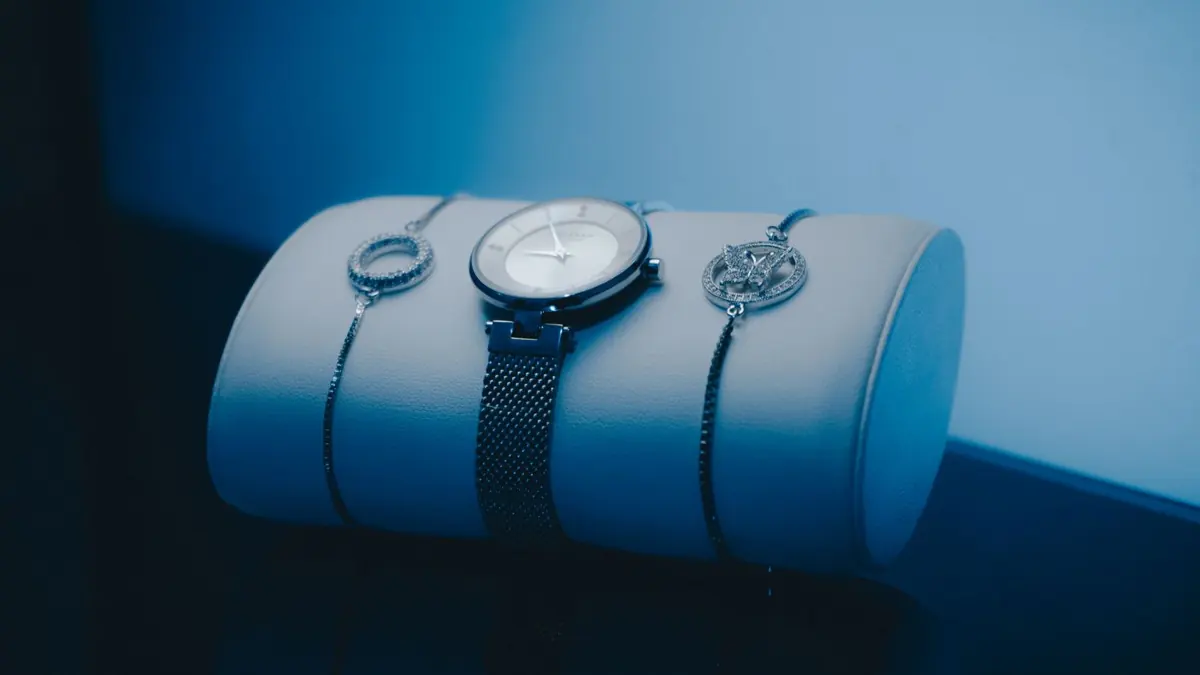
Cover: Pexels photograph, used as an editorial illustration. Stock models and products shown do not imply endorsement or independent product testing. Image license.