If you need a fast answer: cotton, linen and viscose all look like soft, breathable everyday fabrics, but they behave differently after the first wash, under heat, and over months of wear. Cotton is generally the easiest of the three to care for at home, though the care label should still set the washing method. Linen is strong and cool but wrinkles and softens unevenly. Viscose, a regenerated cellulose fiber, drapes well but is weaker when wet and generally needs gentler handling; follow the care label for specific instructions. The problem most readers face is not choosing a “best” fabric; it is predicting how a specific garment will look after a year of real laundry, sitting, sweating and folding. This checklist is built around that problem.
Why the label name alone is not enough
A shirt labeled “100% cotton” and a dress labeled “viscose” tell you the fiber, but not the yarn count, weave, finishing treatment, or how the garment was cut. Two cotton shirts can feel and wear very differently depending on whether the fabric is a loose plain weave or a tight twill. The same is true for linen, which is sold in everything from crisp shirting to slubby, heavy-bodied trousers, and for viscose, which can be a light crepe or a heavy, stiff woven. Treat the fiber as a starting point and read the garment’s construction as the second step.
Inspection checklist before you buy
1. Check the fiber content and the care instructions together
Look at the composition label and the care label as a pair. A cotton-viscose blend, for example, may be more comfortable than pure cotton but may also need the gentler laundry routine that viscose calls for. A general background reference for care symbols and fabric-specific guidance is the textile care resource at clevercare.info, which covers washing, drying and ironing for cotton, linen and viscose; it is background reading rather than a substitute for the garment’s own label. Reading the care label first prevents the most common disappointment: buying something you cannot realistically wash the way you intend to.
2. Decide how you will wash it, not how you hope to
Be honest about your laundry habits. If you machine-wash everything hot and dry it on high heat, check the care label first: hot washing and high-heat drying can damage some cotton, linen and viscose items, and viscose is generally more sensitive than cotton. If you prefer to air-dry and iron occasionally, linen becomes a more appealing choice. Write down your real routine and check each candidate against it.
3. Examine the weave by touch and by light
- Cotton: Look for an even, closed weave. Hold the fabric up to light; large gaps or thin spots suggest a lightweight, fragile cloth that may pill or wear through at seams.
- Linen: Notice the slubs (thicker and thinner sections of yarn). Slubs are normal and give linen its character, but very irregular slubbing may indicate lower-quality yarn that frays faster.
- Viscose: Feel for drape and surface sheen. A good viscose should hang smoothly; if it feels papery or cracks when folded sharply, it may be heavily finished and less durable.
4. Inspect the seams and stress points
Fabric choice matters less than construction at the points that take strain: armholes, the crotch of trousers, buttonholes, and side seams on skirts. Linen in particular tends to crease along seams, and viscose can stretch or shift under weight. Look for flat-felled or double-stitched seams on structured pieces, and check that buttons are sewn with a shank or reinforced thread.
5. Test the wrinkle expectation
Crush a small corner of the fabric in your hand for ten seconds, then release it. Cotton usually recovers reasonably; linen recovers less and will show a crease, which many wearers accept as part of its look. Viscose varies widely. If wrinkles would bother you at work or at events, factor in ironing or steaming time from the start.
6. Consider lining and layering
Viscose is often used as a lining or in layered garments because it is smooth against the skin. If a viscose dress has an unlined or sheer panel, check how it will behave with your undergarments and whether the opacity suits your needs. Linen can be scratchy against skin if it is coarse; a lightweight lining or a softer finish may be worth checking.
How the three fabrics compare in everyday wear
| Consideration | Cotton | Linen | Viscose |
|---|---|---|---|
| Home washing tolerance | Generally high | Good, but use care with finishes | Lower; gentler handling advised |
| Wrinkle behavior | Moderate | Pronounced, often part of the look | Varies with weave and finish |
| Drape | Structured to soft | Crisp to relaxed | Fluid and smooth |
| Typical failure point | Pilling or thinning at friction areas | Fraying at seams and edges | Weakened when wet; stretching |
| Best suited to | Frequent washing, daily wear | Warm-weather layers, relaxed tailoring | Dresses, blouses, linings |
Common mistakes
- Judging by the fabric’s feel in the store alone. Finishing treatments can make a fabric feel softer or crisper than it will after several washes.
- Assuming all linen is the same. Lightweight and heavyweight linen behave very differently in both comfort and durability.
- Washing viscose like cotton. Vigorous agitation, high heat and long soaks can distort or weaken viscose, so follow the care label closely and avoid overriding it.
- Ignoring blends. A cotton-linen or cotton-viscose blend can offset the weaknesses of each fiber, but it also inherits some of their care demands.
A worked example
Suppose you are comparing two summer tops for a week of commuting. Top A is a 100% cotton voile with a plain weave. Top B is a viscose blouse with a crepe surface. Both are sold in the same style. You plan to wash them weekly and dry them on a line. Top A will likely hold its shape through repeated washing and line drying with minimal attention. Top B will need you to wash it on a gentle cycle, avoid wringing, and reshape it while damp. If your schedule allows that care, Top B may look more elegant; if not, Top A is the more practical choice. This example is illustrative, not a test result, but it shows how the same question of “which fabric?” can have different answers depending on your routine.
Questions to ask yourself
- How often will I wash this, and at what temperature?
- Am I willing to iron or steam, or do I need a fabric that looks acceptable without effort?
- Will this garment be worn against the skin, over other layers, or as an outer piece?
- Does the care label match the way I actually live?
Limitations of this guidance
This article is editorial guidance based on fiber characteristics and care resources, not firsthand testing of individual garments. Durability depends heavily on yarn quality, weave density, finishing, and how a piece is cut and sewn, all of which vary between manufacturers. Use the checklist to narrow choices and inform your questions, not as a guarantee of how any specific item will perform.
Related resources
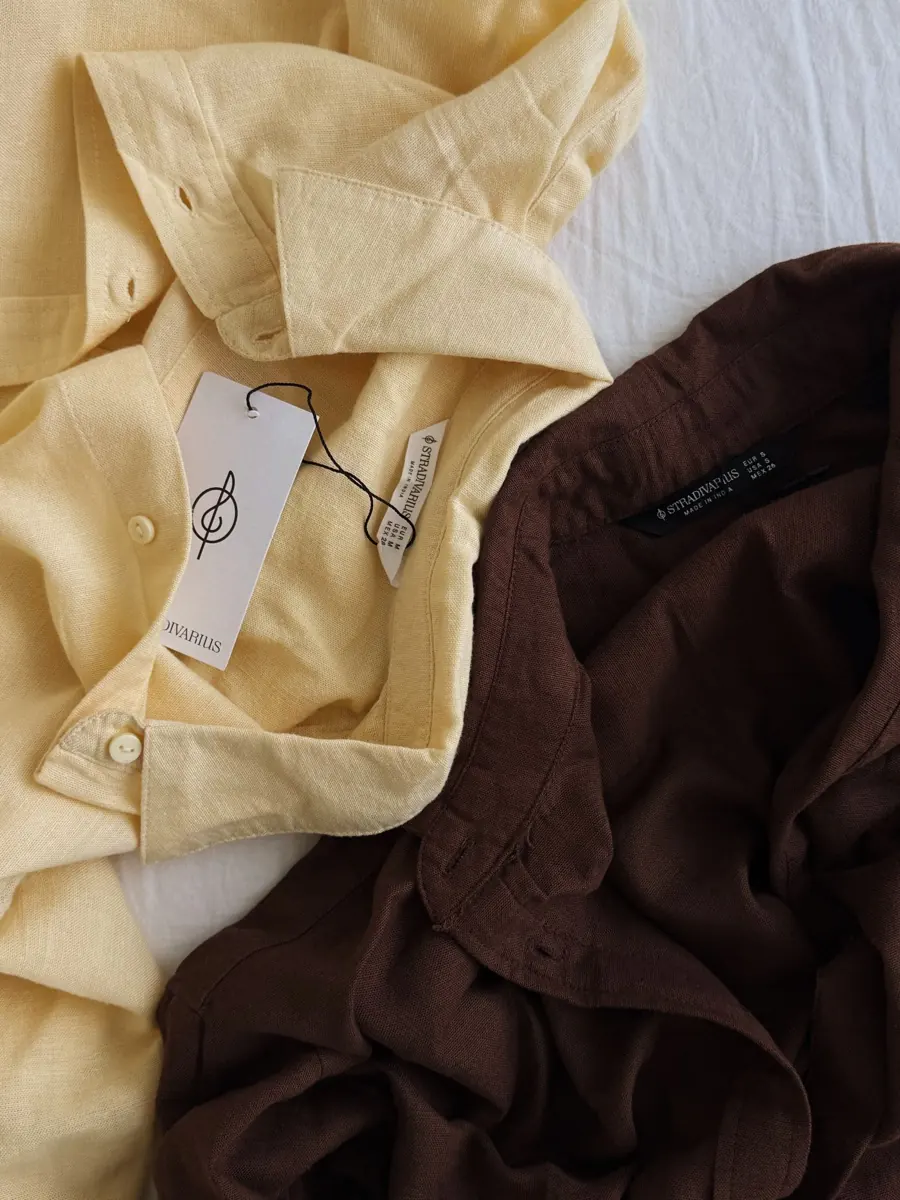
Cover: Pexels photograph, used as an editorial illustration. Stock models and products shown do not imply endorsement or independent product testing. Image license.