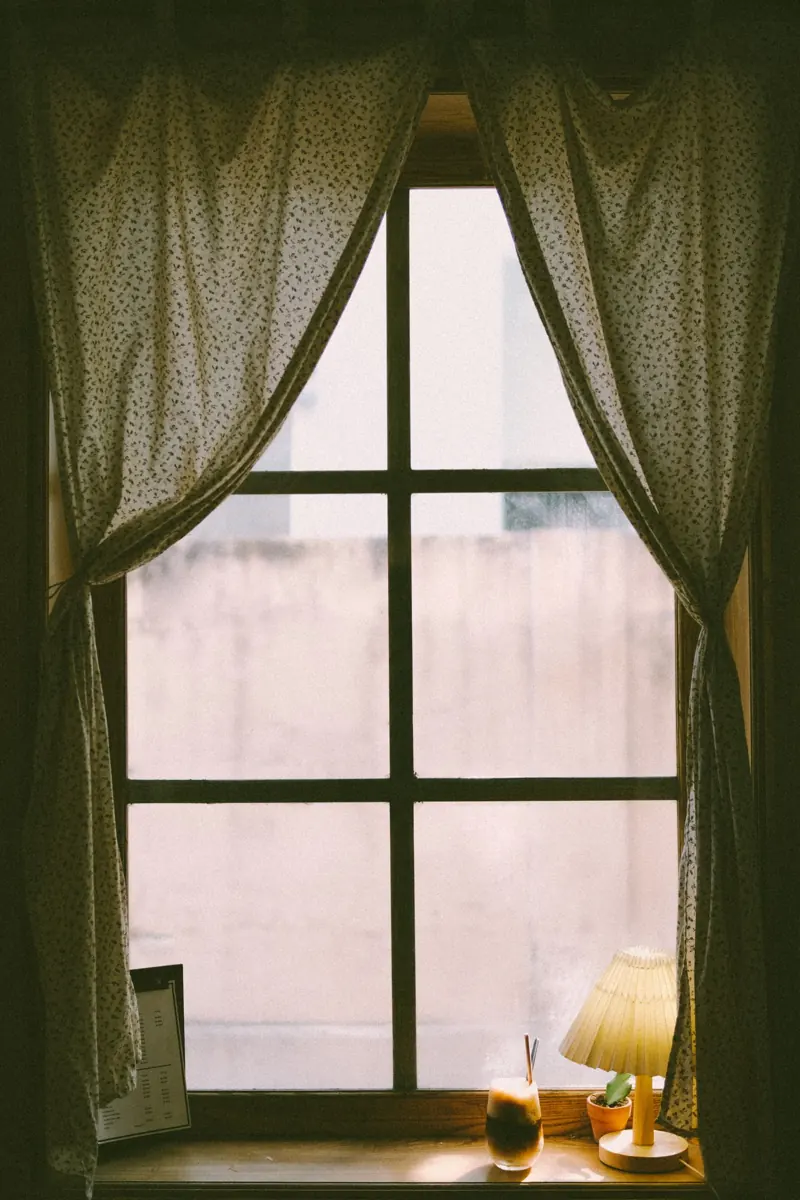
Choose curtains by ranking three jobs in order: how much privacy the room needs, how much daylight you want to keep or block, and how the curtains will be used every day. Most curtain disappointments come from skipping this ranking. A sheer that looks elegant in a showroom can be useless in a bedroom facing the street, and a heavy blackout panel can make a small living room feel like a cave. This guide gives you a working method, a worked example, and the trade-offs that catalogs rarely mention.
Start with the problem, not the fabric
Curtains solve a handful of distinct problems: people looking in, light arriving at the wrong time, heat or cold passing through the window, noise, and the room’s appearance when the curtains are open or closed. Each problem points toward a different choice. Privacy depends mostly on the opacity of the fabric and on how far it extends past the window. Light control depends on opacity, colour, and whether a backing or liner is present. Daily use depends on how often you open and close the curtains, how much you need to reach the window, and whether children or pets will touch them.
Before shopping, walk around the room at the times you actually use it. Stand where a neighbour or passer-by could see inside at night. Note when the sun hits the window and whether that glare is a problem for screens, sleep, or a sofa. Notice whether you open the curtains every morning or leave them closed for months.
A three-question method
1. How much privacy does this room need?
Rate the need as low, medium, or high. A kitchen used mainly in the daytime may need only light diffusion. A bedroom on a ground floor facing a shared path needs high privacy. A living room in a house set back from the road may fall in between. The privacy need determines whether a sheer layer is enough or whether you need a fabric that blocks visibility after dark.
A useful test: at night, switch on the room’s main light and look at the window from outside, or ask someone to do so. Silhouettes and colour shapes are often visible through lightweight fabric even when detail is hidden.
2. How much light should pass through?
Light control is a spectrum. Sheer fabrics diffuse light softly and keep the view, but they do not stop it. Lined or heavier woven curtains reduce light significantly. Fabrics marketed as blackout are the strongest option for sleep, but they remove most daylight and can make a room feel closed in during the day. Choose the level by the hours that matter: if you want darkness at 6 a.m. in summer, that is a different requirement from wanting a bright room in the afternoon.
Colour also matters. Darker fabrics generally block more light than pale ones made from the same material, but a dark curtain against a bright exterior can look heavy. A light-coloured liner behind a patterned or darker outer layer is a common way to balance appearance and performance.
3. How will you use them every day?
This question is the most neglected. Count how many times a day the curtains open and close. If the answer is twice, almost any hanging system works. If it is many times, a smooth-running track or a rod with good rings matters far more than the fabric’s appearance. Consider also whether the curtains must clear a radiator, a plant shelf, or a window handle, and whether the fabric will need washing or dry cleaning at a practical frequency.
Daily use also covers safety and household life. Cords and chains are a concern in homes with young children or pets, so a cordless operating method may be preferable. Heavy lined curtains can be harder to launder at home, which matters if you have pets or allergy sensitivities.
A worked example
Hypothetical example: A ground-floor bedroom faces a shared garden path. The occupant works nights and sleeps through the day. The room gets strong morning sun from the east. Scoring the three questions gives: privacy high (the path is used by neighbours), light control very high (daytime sleep), and daily use low (curtains stay closed for most of the day and are opened only occasionally).
The conclusion is that a single lined, fully opaque curtain panel is the right core choice, hung on a rod extending well past each side of the window so light cannot leak around the edges. A sheer layer would add little here, because it would not improve privacy or light control. The living room next door, by contrast, faces the street, is used in daylight, and is opened and closed several times a day. There a medium-opacity fabric on a smooth track, with a sheer for daytime, would suit the rhythm better.
Trade-offs to weigh
| Need | Typical direction | Main trade-off |
|---|---|---|
| High privacy | Opaque or lined fabric | Reduces daylight and outlook |
| Strong light control | Lined or blackout-style fabric | Heavier to hang and launder |
| Daylight with privacy at night | Sheer plus opaque layer | Two layers to manage |
| Frequent opening and closing | Smooth track or quality rings | Track systems cost more to install |
| Child or pet safety | Cordless or inaccessible cords | Limited mechanism options |
No single fabric wins every category. Opacity and daylight are linked: the more you block, the more the room loses natural light. Layering is the usual compromise, and it works best when the two layers have separate jobs rather than competing for the same one.
Common mistakes
- Choosing by appearance in a sample swatch, which rarely shows how the fabric behaves when backlit.
- Hanging the rod at window width, leaving gaps where light and sight pass at the edges.
- Ignoring the curtain’s length relative to the floor and radiator, causing dust collection or trapped cords.
- Buying one fabric for every room without comparing each room’s needs.
- Forgetting the back of the room: curtains seen from inside, at dusk, may show a different colour from the outside view.
A practical sequence
- Score privacy, light control and daily use for each room on a scale of low, medium, or high.
- Test visibility at night with the room lit, from the outside if possible.
- Decide whether one layer or two will meet the scores, noting that two layers suit mixed needs.
- Measure the rod placement so it extends beyond the window frame on each side.
- Check the operating method against how often and by whom the curtains will be used.
- Look up the care label and plan a realistic washing or cleaning routine before buying.
Caring for fabric
Care instructions shape how durable and practical a curtain will be. Labels often specify washing temperature, drying method, and whether dry cleaning is advised. Fabric type is a good indicator: cotton, linen, and synthetic blends behave differently with heat and agitation, and the clevercare.info textile care resource is background reading on care symbols and fabric types, and it can help you interpret a label before you commit to a material. Where a label recommends hand washing or professional cleaning, factor that cost and effort into the decision.
Questions to ask before buying
- Which hour of the day is the room’s biggest privacy or light problem?
- Will anyone be opening and closing these curtains more than twice a day?
- Is the care label compatible with how I actually do laundry?
Related resources
Cover: Pexels photograph, used as an editorial illustration. Stock models and products shown do not imply endorsement or independent product testing. Image license.